

The Internet transformed civilisation in the past. By 2040, it may undergo a new metamorphosis that will fundamentally change cybersecurity, global connectivity, financial systems, medical infrastructure, and independent military actions. Currently, researchers and tech companies are designing what experts are calling the so-called Quantum Internet- a new network architecture that is controlled by quantum mechanical laws, and not traditional computational models.
This future digital ecosystem offers one of the features the current web essentially lacks: virtually unbreakable encryption protocols.
The Quantum Internet could form the foundation of a more secure technological age, whether it comes to the security of financial transactions or the security of classified defence communications.
What is Quantum Internet?

The Quantum Internet is a type of Internet that transmits data as quantum signals rather than electrical or optical signals. It is based on the principles of quantum physics, particularly quantum entanglement.
This effect brings about an immediate relationship between two particles- altering one will affect its counterpart, despite the distance between them. Scientists are looking to leverage this impact to develop communication systems that provide complete protection against covert interception.
Traditional Internet architecture works with information using binary numbers (0s and 1s); quantum networks operate with quantum bits, or qubits.
The Reason why The Current Internet is vulnerable.
Modern digital defence systems rely on basic cryptographic protocols to protect financial documents, email, government documents, and web-based financial transactions. However, the next generation quantum processing devices already have the theoretical capability to break the existing cryptographic systems within a few moments:
- An RSA algorithm, which is the basis of modern-day security, might become useless due to advanced quantum equipment.
- Opponents with such computing capabilities could potentially crack confidential data at an alarming rate.
- Large warehouses of healthcare information, financial data, or strategic data may be subjected to a disastrous exposure.
- Therefore, the scientific community is hastening the development of post-quantum cryptographic infrastructures to counter such a new existential threat to the integrity of information on the planet.
How Quantum Internet Creates Unhackable Systems
The contemporary digital protection is based on quantum cryptography, which safeguards banking information, electronic communications, secret government documents, and e-commerce. Nonetheless, quantum processors pose a threat of breaking down traditional protection algorithms in virtually no time.
Key vulnerabilities include:
- The RSA protocol, ubiquitous in the present platforms, would be destroyed by quantum-enabled foes.
- The potential to violate confidential repositories in a few moments is the power of malicious actors with such computational supremacy.
- Massive data archives of healthcare data, economic data and military intelligence are put at risk of destruction.
As a result, the scientific community is hastening to design quantum-resistant protection measures before this shift in the security paradigm.
Quantum Communication: Present State and Perspectives:

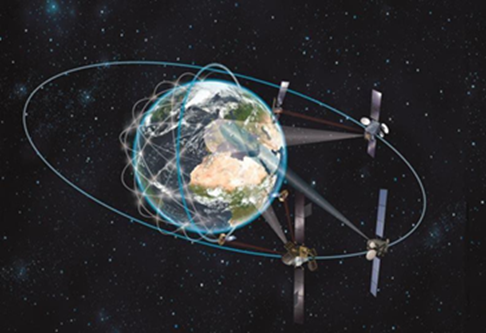
- The Micius satellite was the first orbital quantum encryption by China, which was able to achieve secure communication connections between remote cities at a range of thousands of kilometres.
- The US, European countries and India are making huge investments in quantum ecosystems and infrastructure of quantum networking.
- IBM, Google Quantum AI and Microsoft Quantum are the top technology companies that are actively developing quantum computing and communication.
- The projections of the industry show that by 2040, quantum Internet architectures will be able to connect governmental agencies, banks, research laboratories, hospitals, and smart cities.
- Industries to Alter by 2040.
1. Banking And Finance
Banks and other financial institutions are losing billions annually to cybercrime. Quantum Internet security has the potential to protect:
- Online banking platforms
- Cryptocurrency trades
- Cross-border wire transfers
- Credit card networks
Banks may also implement quantum encryption to create virtually impenetrable payment systems- imagine a quantum check on international wires in real time, and fraud is reduced dramatically.
Healthcare
Patient data is highly sensitive and is stored in hospitals. A secure medical network secured by quantum may cover:
- Health histories
- AI diagnostics
- Remote surgeries
- DNA databases
Imagine an Indian hospital using robotic surgery with a quantum-hardened connection that cannot be hacked.
2. Defence & National Security
- Quantum tech is a strategic resource to governments. Quantum Internet could fortify:
- Military transmissions
- Defence satellites
- Nuclear command systems
- Intelligence grids
Countries that learn this field can gain a strong geopolitical advantage.
3. Smart Cities & IoT
The connected device population will grow to billions, all in cities by 2040:
- Autonomous vehicles
- Smart homes
- Traffic grids
- AI surveillance networks
Traditional cybersecurity might not withstand such extensive networks. A much more robust protective layer could be infused by quantum infrastructure.
The Quantum Internet faces these challenges.
Quantum Internet is still quite challenging. Key barriers include:
- Environmental Fragility – The quantum states are lost due to slight thermal or mechanical perturbation, and transmission becomes extremely unstable.
- High Infrastructure Costs – It requires dedicated fibre optics, space relay nodes and cryogenic systems to be deployed.
- Distance Barriers — Quantum repeaters are required to compensate for signal loss across long distances, but are not yet in practice.
- Fragmentation of Protocols – Lack of cohesion. International standards do not exist, making cross-border implementation challenging.
Irrespective of these challenges, progress is picking up.
Will Quantum Internet supplant the existing Internet?
The majority of experts predict that there will be a hybrid digital ecosystem and not a wholesale substitution:
- Normal jobs–media streaming, social networking and normal web surfing would continue on conventional infrastructure.
- High-stakes communications, including financial transactions and classified information, would be secured by quantum-encrypted channels.
This two-structure architecture might become the main paradigm of functioning by approximately 2040, integrating accessibility and inaccessibility of security in specific applications.
Artificial intelligence and quantum Internet.
Artificial intelligence and quantum computing are set to be inseparable partners. Further AI systems will be used to manage massive stores of sensitive data, and quantum-resistant communication links will ensure that such systems are not interfered with or intruded upon. Here are some of the scenarios:
- The hospitals that use AI could share the records of patients using quantum connections that are not tamperable.
- Self-controlled defence drones may also be based on quantum-coded communications to coordinate missions.
- Smart trading algorithms may be used to carry out cross-border trading in impenetrable quantum systems.
The combination of these inventions could create one of the strongest technological synergies in human history.
Would Ordinary people be able to use the quantum Internet?
As early as 2040, quantum technology could become part of daily life and be within reach of the average person. They can be used in everyday life, such as:
- Tamper-proof messaging platforms
- Cloud storage (encrypted).
- Foolproof biometric verification
- Fortified e-commerce transactions
Next-generation digital identity frameworks.
Similarly, current WiFi users who seldom think about radio waves will probably access quantum networks without understanding the science behind them.
The International Race To Quantum Supremacy.
The global race for quantum supremacy is intensifying as five powers are at the forefront of the race:
- China -actively building its quantum communications systems.
- United States – investing a lot in quantum computing R&D.
- India -increasing national quantum missions.
- Germany – quantum alliances across Europe.
Japan – developing quantum cryptography.
The policymakers are aware that the first scalable quantum Internet backbone will capture next-generation cybersecurity and worldwide data transmission. The international market for quantum technology is projected by industry estimates to grow to billions of dollars over the next few decades.
Final Thoughts
Quantum Internet 2040 may be the most radical digital infrastructure development since the introduction of the web. Its fundamental capabilities span several key areas: data protection is virtually impossible, banking systems are more secure, AI-to-AI communications are encrypted, medical databases are secure, and communications of the next generation. Despite still being in early stages, there has been an upward trend in development. In addition to brute speed, this development is just as crucial, as it will provide real security in an era when all systems are connected online.
FAQs
1. In simple terms, what is Quantum Internet?
Quantum Internet is a future-generation Internet based on quantum physics to develop highly secure communication networks immune to hacking.
2. What is the reason why Quantum Internet is believed to be unhackable?
Communication involving quantum systems undergoes an instant alteration when an attempt is made to intercept the information. This enables users to know about hacking promptly.
3. Does Quantum Internet have a chance to substitute WiFi and the existing Internet?
Not entirely. It is thought that, in the future, systems will combine both conventional Internet and quantum communication systems.
4. What are the countries that are at the forefront of the research on the Quantum Internet?
Other nations such as China, the United States, and India are pumping a lot of funds towards quantum communication and quantum computing studies.