
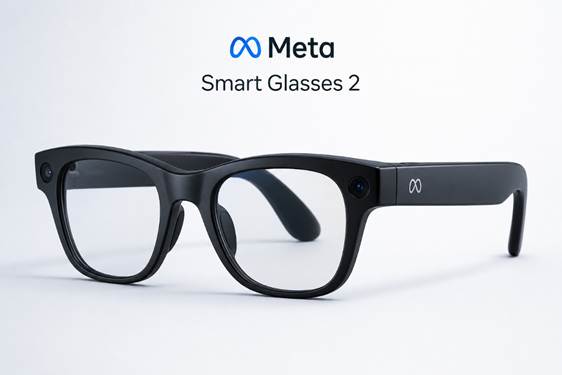

Wearable technology has a new wave, as smart eyewear has become a reality, not a fantasy. After smartphones and smartwatches, tech giants are now competing to integrate AI into regular glasses, with Meta as the first to adopt this trend with its new intelligent frames.
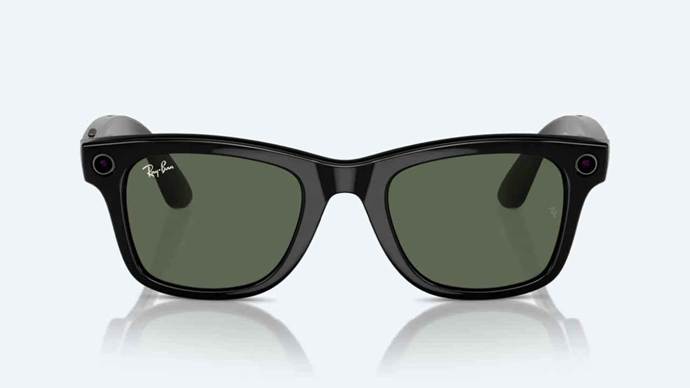
The expected Meta Smart Glasses 2, which will be connected to Ray-Ban Meta Gen 2, and the future-generation AI glasses are expected to transform the digital landscape in India. These devices have the potential to transform the way Indians learn, travel, create content, shop, and work by allowing them to do so through voice-activated connectivity and real-time intelligent assistance.
India is one of the most rapidly developing digital economies in the world, with immense potential. Increasing internet penetration, low data costs, and the increasing use of AI make the country one of the primary markets of augmented eyewear in the decade.
What Are Meta Smart Glasses 2?
The second-generation smart eyewear, designed together with Ray-Ban and EssilorLuxottica, combines haute couture design with embedded artificial intelligence, integrated imaging, audio and transparency micro-displays.
Unlike traditional eyewear, the wearables allow:
- Image and video capture in high resolution.
- Real-time multilingual interpretation
- Voice-based feedback based on AI.
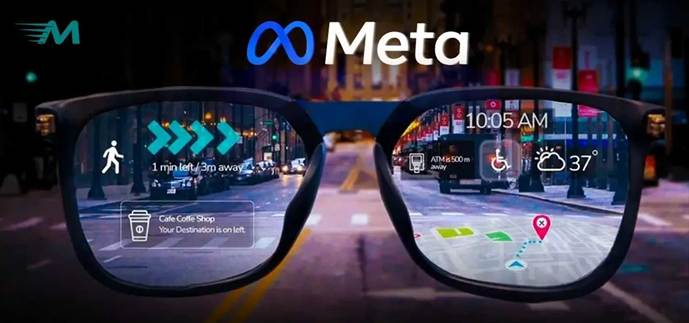
- Heads-up notification projection
- AR spatial wayfinding.
- Touch-free telecommunication and messaging
After a gradual global rollout of previous versions, the new range features AI-enabled visual interfaces, longer power supply, and improved speech recognition.
Why Smart Glasses Matter in India
The 900 million internet subscribers in India are increasingly demanding frictionless interaction with technology beyond smartphones. AR eyewear will fill four major domestic requirements:
Unassisted Navigation —
Bike riders in traffic-filled metros, such as Delhi, can get turn-by-turn directions on their screens and avoid the dangerous phone-checking behaviour. Directions shown in real-time to both pedestrians and motorists are bound to happen in future wearables.
Instant Translation —
Hundreds of regional languages are used in the country, and AI-powered spectacles might help to overcome language barriers. A Hindi-speaking student would have the opportunity to attend live English lectures; a Bengali tourist would be able to speak Tamil Nadu; interstate business talks could be held without interpreters.
Pedagogical Shift —
The students may be able to move 3D holographic objects, receive on-demand computational lectures, participate in distance seminars without moving their hands, and receive live subtitles during faculty talks. The immersive experiential curriculum might hence be implemented at coaching centers.
Creator Economy Surge —
The influential market in India can use these devices for first-person filming, hands-free livestreaming, capturing spontaneous lifestyle moments, and creating a frictionless travelogue. Media professionals are already piloting such hardware for runway coverage and event reporting.
Features Expected in Meta Smart Glasses 2
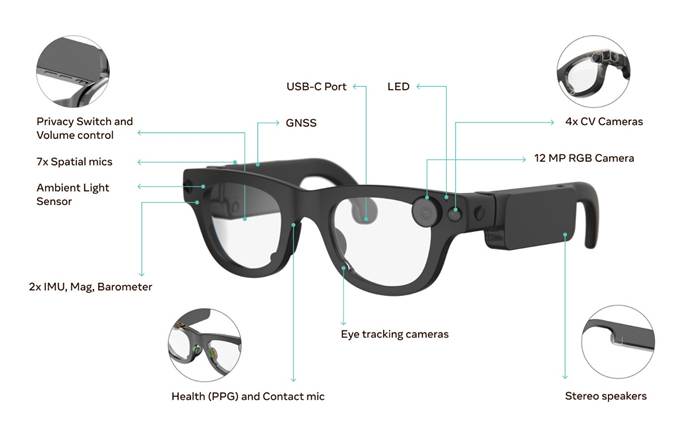
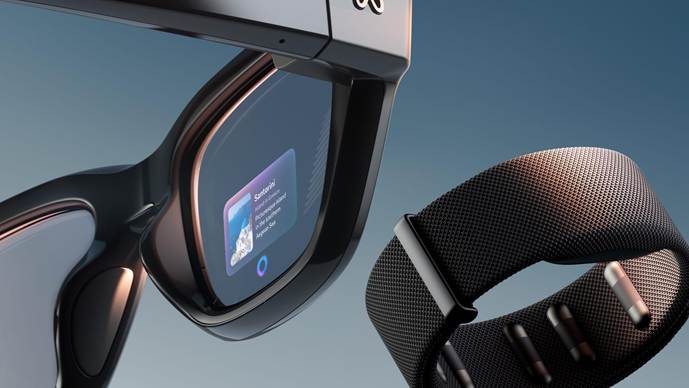
The new generation Meta glasses will be more intelligent and practical.
Voice-Powered AI Assistant
Meta’s AI will act as the control centre. Wearers can give voice commands such as “summarize this file,” “translate this board,” “dial my contact,” or “complete a UPI transaction,” and receive spoken responses instantly. The Indian versions can implement Hindi language processing and voice-based payment mechanisms.
In-Lens Smart Display
Future versions would incorporate mini-displays in the lenses, enabling users to see notifications, map directions, read on-screen subtitles, follow presentations, and have artificial intelligence reminders, all without having to pick up a phone.
Enhanced Optics & Sound
Meta eyewear is already providing better imaging and open ear audio to the current generation. In the future, it will be able to capture 4K video, improve its microphones, enable active noise cancellation, and improve night photography.
Extended Power Endurance
The supply of power has traditionally limited wearable technology, but more recently, Meta designs have enabled all-day use.
The obstacles to Indian Markets.
Although the prospects are promising, there are still several challenges.
Cost Barrier
Premium models sell above 40,000 in India. Popular adoption requires more affordable pricing that is affordable to middle-income earners.
Surveillance Worries
Social discomfort is provoked by camera-built-in eyewear. Ethics and the monitoring of recordings are being discussed globally, which suggests that India may need industry-specific educational, corporate, and civic ethics.
Thermal and Power Strain: Under extreme heat in India, batteries may perform poorly, leading to discomfort for users.
Connectivity Reliance
State-of-the-art operations require well-developed data networks, which are often absent in rural areas.
The way Indian Industries would be transformed with Smart Glasses.
Healthcare
The patient records can be accessed, and the surgeon and physicians can work on the cases or examine them without touching any devices.
Retail
AR eyewear could be used by shop staff to track stock and answer shoppers’ questions.
Tourism
Through smart lenses, guides can provide AI-driven commentary in a variety of languages.
Manufacturing
Assembly line operators can receive immediate instructions on how to operate equipment via AR displays.
Education
Teachers might present multifaceted concepts through interactive visuals, using augmented reality apps.
Will Smart Glasses substitute Smartphones?
- But Smartphones, they will not go away immediately, they are too integrated into everyday life.
- Smart glasses would help to decrease screen addiction as time goes by.
- The fast activities can be transferred to wearable glasses: messaging, navigation, artificial intelligence searches, calls, notifications, and payments.
- Meta seems to be working towards developing an ambient, always-ready wearable AI that is natural.
Camera Technology Re-defining the creation of content.
The recent eyewear by Meta features two 12MP ultra-wide cameras with enhanced low-light capability, enabling users to capture images across a wide variety of places, e.g., the Himalayan mountains, Delhi and the bazaars of its overcrowded markets. The first-person videos give real-life, interactive content to technology enthusiasts and content developers. They have led indicators; thus, privacy is assured when taking records.
The Indian Market Opportunity
The adoption of Meta Ray-Ban eyewear has a bright future amid India’s search for cost-effective technological solutions. As 5G infrastructure spreads and more people become digital, customers are attracted to devices that complement, not replace, their smartphone use. Wearable displays are hence an intelligent advancement that would keep up with the online world and reduce addictive screen time.
The Future of Smart Glasses in India
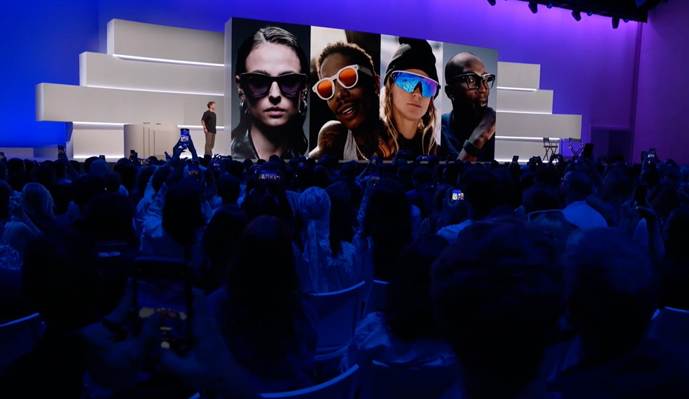
It has a promising future.
India is poised to grow smart glasses: it has a huge youth base, is increasingly familiar with AI, has cheap internet access, is growing its creator economy, and is expanding digital payments.
In case of a decrease in prices and addressed privacy concerns, adoption may reach the mainstream in 5-10 years.
Students can view virtual classes with AI glasses. Travelers can travel phone-free. Artists can stream out of their eyes. Workers can use holographic screens instead of laptops.
The transition is not rapid but is in progress.
Meta is investing in wearables and AI-based AR. Scientists are experimenting with how AI agents can be used in everyday activities using smart glasses.
The tech would turn India into one of the world’s leading markets.
Looking Ahead
The direction of smart eyewear in India does not just follow technological innovation but rather practical solutions. With the help of augmented reality, farmers will be able to benefit from crop diagnostics, and healthcare specialists will be able to access patient information during consultations via hands-free interfaces. With the introduction of Meta’s second-generation intelligent spectacles into the market, the localised software environment, as well as native application integration to accommodate the Indian operating environment, is likely to grow swiftly.
Buy: – click here
FAQs
1. Do you have Meta Smart Glasses 2 in India?
India already has some Meta smart glasses models available via Ray-Ban. The newer versions of AI-powered will gradually grow in the Indian market.
2. How much would the Meta Smart Glasses cost in India?
The latest high-end Meta smart glasses are priced at an average of ₹39,900 in India, depending on features and model.
3. Is it possible to translate languages using Meta Smart Glasses?
Yes. Newer Meta AI glasses are being developed, with live translation and AI-enabled voice assistance.
4. Do smart glasses stand a chance of replacing smartphones in future?
Smartphones will be here to stay, but smart glasses can reduce phone use for activities such as navigation, communication, AI support, and notifications.
Related Post: – 15 CPU-Intensive PC Games Dominating Gaming in 2026