
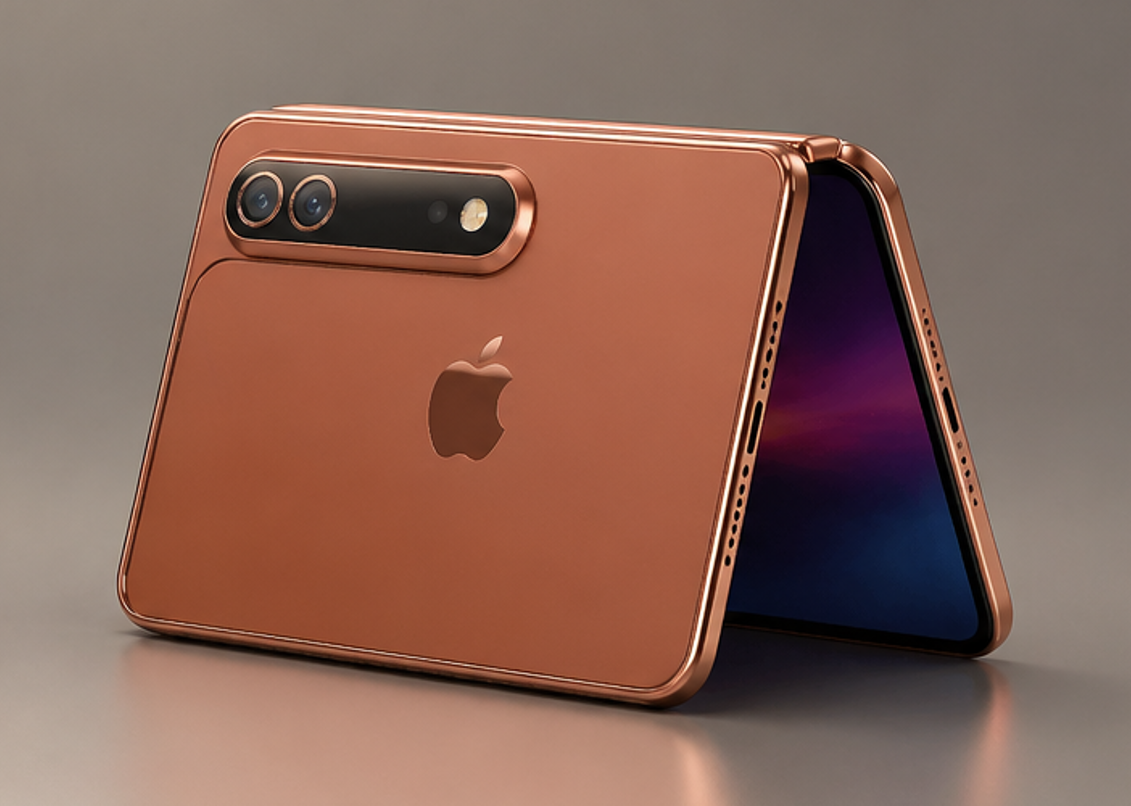

Apple has long neglected the foldable phone segment. Competitors such as Samsung and Huawei have mainstreamed foldable devices, but Apple has remained silent. That silence may soon be broken.
New supply-chain indicators and internal reports suggest a forthcoming launch of the foldable iPhone. Analysts believe Apple is designing a high-end foldable that could redefine the market, as the 2007 iPhone did.
The main question will be: Is the iPhone Fold a real product?
The current leaks indicate that the answer to this question is increasingly positive.
Apple’s Foldable iPhone 2026: The Future Unfolds
There is a radical change in the mobile technology environment. Samsung’s dominance in the foldable segment over the years could soon be challenged as Apple reportedly moves towards releasing its own foldable iPhone. There is speculation in the industry that we may see the market in 2026, and the specifications it may have are projected to bring a paradigm shift in the high-end capabilities of smartphones and users’ expectations.
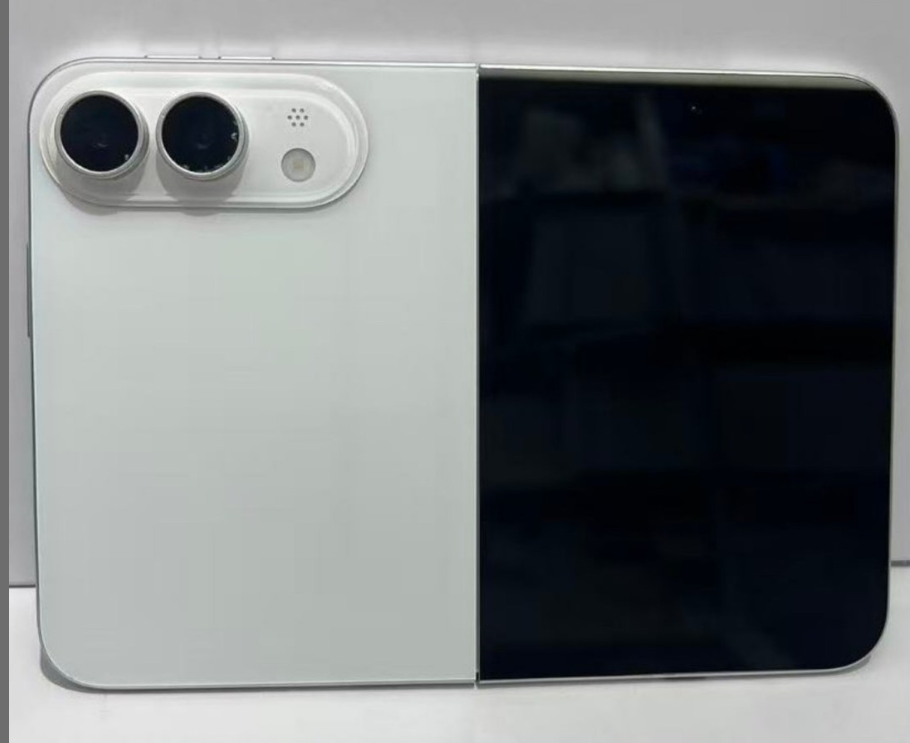
Source: https://fdn.gsmarena.com/imgroot/news/26/06/iphone-fold-ultra-maybe-delayed/popup/gsmarena_004.jpg
The Biggest iPhone Fold Leaks So Far
Various credible technology insiders have leaked information about Apple’s future foldable project, indicating that the tech giant has been internally assessing a wide range of pre-production prototypes.
1. Book-Style Folding Architecture
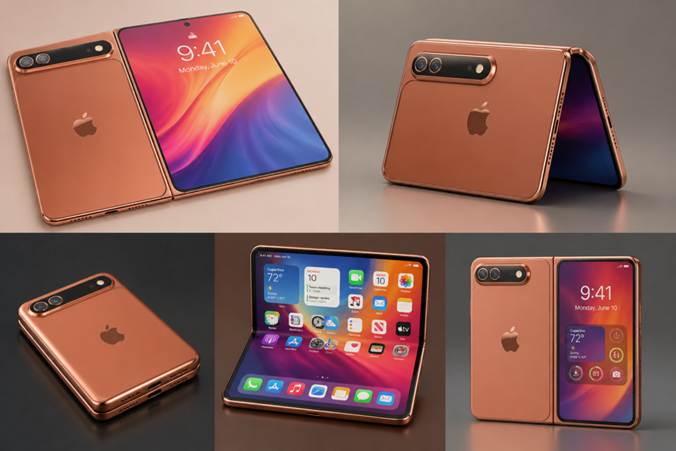
- Apple could potentially implement a book-like foldable design similar to the Samsung Galaxy Z Fold series.
- The handset might expand to display a tablet-sized panel while remaining a normal iPhone in its small size.
- Capabilities include streaming films, editing documents, split-screen multitasking, playing games with greater accuracy, and browsing e-books.
2. Display Fold Minimally Visible.
- One of the most vigorous efforts by Apple’s engineering department is to reduce the centre crease as much as possible, or even eliminate it.
- The innovation can be the iPhone Fold’s most compelling market benefit.
- Apple can overcome consumer reluctance by offering innovative screen technology.
3. Ultra-Premium Titanium Construction
- The foldable iPhone could use titanium, as the iPhone 15 Pro and other models will.
- The benefits are increased structural resilience, lower total mass, improved flexural resistance and a longer operational lifespan.
4. State-of-the-Art Hinge Mechanism
- Experimentation at Apple has focused on liquid-metal hinges and highly robust folding architectures.
- Engineered to withstand prolonged repetitive folding and unfolding.
- Strives for structural rigidity and minimal flex when fully extended.
Expected iPhone Fold Display Size
- Leaked specifications suggest that the device might have a ~6-inch outer panel.
- It is also expected to feature a 7.5- to 8-inch collapsible interior screen.
- These dimensions would be very similar to those of a small tablet.
- Users could switch between handheld and workspace functions instantly.
- This can be of great use to students, creatives, and professionals alike.
Possible AI Features
Apple is integrating machine learning into its devices. The foldable iPhone can have built-in neural processing as part of Apple Intelligence, which includes:
- Intelligent task management
- Adaptive interface scaling
- Instantaneous linguistic conversion
- Automated document condensation
- Refined image manipulation
The larger foldable screen would provide the AI tools with more space.
iPhone Fold Release Date and Design Breakthroughs
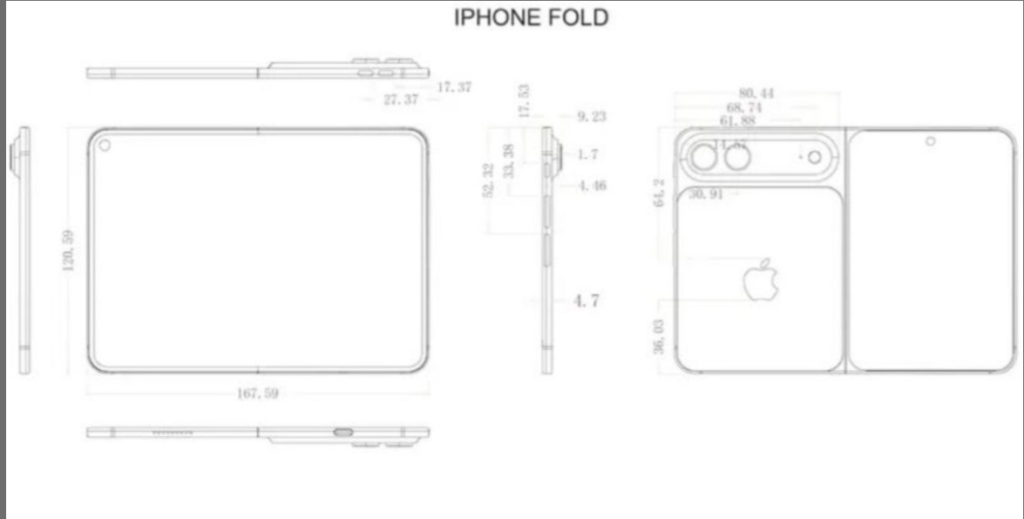
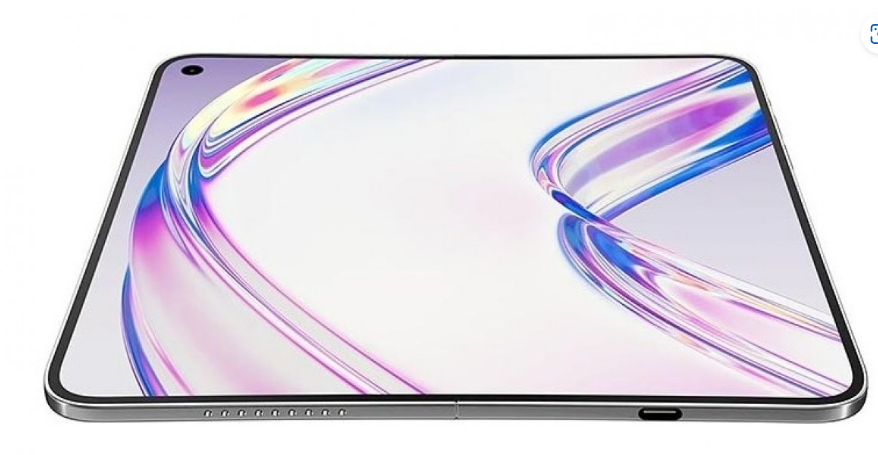
Supply chain sources suggest the foldable iPhone could launch in 2026, though Apple is known to be a silent company. Enlarged, the device will allegedly have a 7.76-inch LTPO OLED display with a 120Hz adaptive refresh rate and HDR10+ support. Its proprietary self-healing memory glass is said to solve the apparent crease problem of its competing foldable models.
The 5.49-inch Ceramic Shield cover is a collapsed cover that allows one-handed operation. The chassis is open at 4.7mm and 9.2mm shut, and features an amorphous alloy frame, which adds to its high-end feel.
Performance & Memory
- Based on a 3nm architecture with unannounced processing power of workstations.
- All storage configurations include 12GB of RAM by default.
- Rear Camera System
- Wide + ultrawide (dual 48MP) sensors with sensor-shift optical image stabilization.
Video features
- 4K 120fps, 10-bit HDR, Dolby Vision and ProRes codecs.
- Professional video recording with immersive audio over video 3D in space.
Front Camera System
Front Camera System
- Dual 18MP selfie cameras with gyroscopic electronic image stabilization (gyro-EIS).
- Battery & Endurance
- The biggest battery in an iPhone ever, with 5500 mAh, specifically designed to fold for all-day use.
Connectivity
- 5G cellular, Wi-Fi 7, and Bluetooth 5.3 to support future wireless performance.
- Satellite Emergency SOS in case of off-grid safety and emergency communication.
Biometric Security
- Face ID with fingerprint authentication on the side of the face, verifying at two layers.
Spatial Tracking
- Ultra Wideband Gen2 to provide more accuracy in spatial awareness and device locating.
How Much Will the iPhone Fold Cost?
- It is also believed that the earliest foldable from Cupertino will set all-time brand pricing records.
- Estimated cost: $1,800–$2,500 (roughly ₹1.5–2.1 lakh)
- Although this valuation seems high, it is perfectly in line with the ultra-premium foldable sector, in which Samsung Galaxy Z Fold6, for example, was launched at a comparable flagship level.
- It is likely a high-end productivity device rather than a regular smartphone.
Source: Image created by website
Expected Release Date
According to industry whispers, Apple’s first foldable handset will be released sometime between 2026 and 2027.
The Cupertino giant has reportedly shelved the initiative on several occasions, citing refinancing, structural strength, and panel devotion.
Ironically, such delays can benefit the brand. Rather than trying to secure an early foothold, Apple appears determined to introduce a highly polished product.
Why Apple Waited So Long
Delayed introduction to Foldables by Apple.
- Cupertino has long preferred strategic patience to expedited launches.
- Weak build quality, short battery life, thick frames, pronounced creases, and high repair costs characterized the first foldable devices.
- Apple would now probably feel that the technology is mature enough for mainstream use.
Why Should You Buy the Foldable iPhone?
The iPhone could be worth buying for users who want the latest Apple innovation and a larger screen experience without carrying both a phone and a tablet. It is expected to combine Apple’s premium design, powerful performance, seamless ecosystem, and advanced multitasking features in one device. If Apple prices it competitively, it could become an attractive option for professionals, content creators, and tech enthusiasts who want a future-ready smartphone.
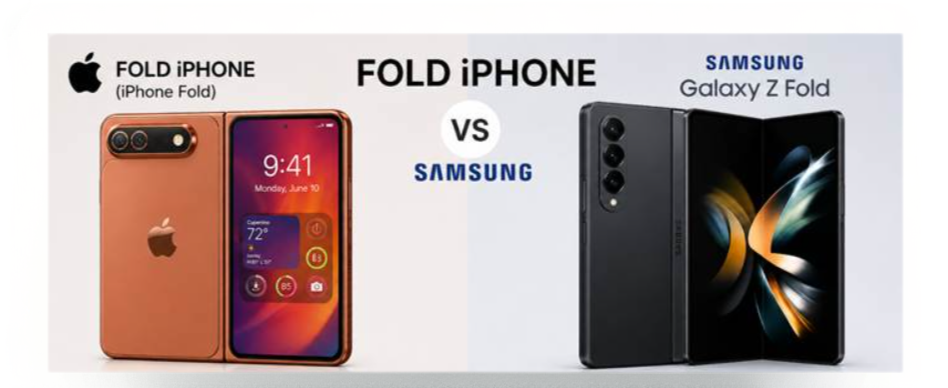
Foldable iPhone vs Samsung Galaxy Z Fold
| Feature | iPhone (Expected) | Samsung Galaxy Z Fold Series |
|---|---|---|
| Operating System | iOS | Android |
| Ecosystem | Apple Ecosystem | Google & Samsung Ecosystem |
| Display | Foldable OLED | Foldable AMOLED |
| Multitasking | Expected to be Highly Optimized | Industry Leading |
| App Optimization | Strong iOS App Support | Excellent Android Support |
| Performance | Apple A Series Chip | Snapdragon Flagship Chip |
| Software Updates | 5 to 7 Years | 4 to 7 Years |
| Design | Premium Apple Design | Mature Foldable Design |
| Innovation | First Apple Foldable | Several Generations of Experience |
| Price | Expected Premium Pricing | Premium Pricing |
iPhone vs. Samsung: Winner Takes It?
- The Samsung advantage: Leads the foldable sector, drawing on decades of experience in hinge and display technology.
- Apple advantage: Hardware-software integration makes multitasking easier and optimizes apps.
- Deciding factor: Quality of the execution.
- Potential outcome: If Apple eliminates creases and makes its foldable more durable, millions of users will be immediately attracted to the product.
Source: Image re-design by author on Canva
My Personal Experience
Most people will consider buying the Foldable iPhone because they expect a premium Apple experience in a completely new form factor. If Apple delivers a durable foldable display, flagship performance, and seamless multitasking at a reasonable premium price, many users may feel it justifies the cost. For Apple fans, the Foldable iPhone could be more than a smartphone. It could be a glimpse into the future of mobile technology
Final Thoughts
The biggest change in foldable phones could be upon us soon. The foldable iPhone from Apple is reportedly in active development, with leaks indicating it will feature a slim design, a durable hinge, high-quality cameras, and an almost invisible crease. With such a release, Apple could reinvent the category, as it did with tablets, smartwatches, and wireless earbuds, which people initially doubted.
coming soon: – Buy iPhone – Apple (IN)
FAQs
- What is the iPhone Fold?
The iPhone Fold is Apple’s rumored foldable smartphone. Leaks suggest it may feature a large foldable inner display and a premium design.
- When will the iPhone Fold release?
Most industry leaks suggest a possible launch in 2026 or 2027.
- How much will the iPhone Fold cost?
Leaks indicate the device may cost between $ 1,800 and $ 2,500, depending on storage and features.
- Will the iPhone Fold have a screen crease?
Reports suggest Apple is working aggressively to reduce or nearly eliminate the visible crease on many foldable phones.
Related Post: – Dell Unveils Powerful AI Laptops. Meet the New 14S, 16S and Alienware 15