
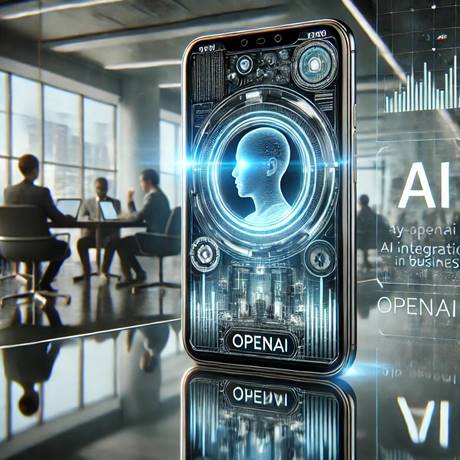

Mobile phones might be in for their largest shakeup since the iPhone. It has been reported that OpenAI is developing its own AI-powered smartphone, which is expected to be released by 2027. ChatGPT’s developer is said to be working on a new smartphone with former Apple designer Jony Ive, dedicated to artificial intelligence.
This news has already resulted in buzz in the tech community. Many people think this could revolutionize how people use their smartphones in everyday life.
Why AI Tech startup OpenAI is going into the Smartphone Market.
OpenAI is already the leader in the AI software industry with its ChatGPT application. AI is being relied upon by millions of users to write, code, study, research and be productive. The company now wishes to exercise greater control over the UX.
OpenAI reportedly wants to develop an “AI-first smartphone” in which the user has no control over the phone other than using the apps—the phone will be run by artificial intelligence.
Many of the apps, typing, and screen switching are still done manually on current smartphones. While OpenAI seems to be different:
- When using AI, it learns your habits automatically.
- The use of voice commands has become the main mode of interaction. Voice commands are the first mode of interaction.
- Applications might lose their significance. The importance of Apps may decrease.
- AI agents work autonomously to accomplish tasks.
- Measuring every aspect of how a person uses the device helps it to learn from them.
This can lead to the development of a whole new category of smart devices.
Jony Ive’s part in the project.
A primary reason this project garnered so much attention was Jony Ive. He’s the mythical designer for the iPhone, iMac and MacBook designs at Apple.
Ive’s AI hardware company, “io,” is said to have been acquired by OpenAI for billions of dollars, to bolster its hardware plans.
The experts think that IVE may develop a more intelligent AI gadget that won’t use the same smartphone layout, opting for a cleaner, minimalist design.
Example:
The AI phone can comprehend:
- I will book the lowest ticket for next Friday’s flight to Delhi and book a nearby hotel.
- The AI could be used to complete the task automatically.
Some of the expected features of the OpenAI AI Smartphone include:
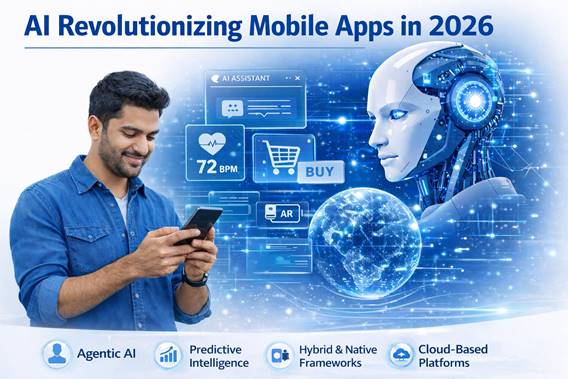
Several interesting possibilities have been leaked and reported.
1. AI First Operating System
One highlight could be an operating system controlled by artificial intelligence. According to reports, OpenAI would like to have both the hardware and the software.
This may allow:
- Deep ChatGPT integration
- Multifunction rear high-performance camera with optical zoom that can be controlled with voice commands
- Smart automation
- Personalised recommendations
- AI actions with a context awareness feature. Context-aware AI actions.
It is possible that the phone could better interpret what people are saying, where they are, when they are going to meet, and what they like and dislike than existing smartphones.
2. High-level AI camera system.
The phone might be equipped with a more sophisticated HDR image-processing system to handle real-world images, according to reports.
This could allow:
- Smarter photography
- Object detection, tracking and recognition systems.
- Accurate real-time translation, no typing needed, using a camera.
- Enabling AI-powered video editing.Supporting AI-driven video editing.
- Incorporated AR features that enrich users’ viewing of products.Improved augmented reality experiences.
- Picture a math equation appearing on the screen of your camera, and getting instant explanations.
3. Powerful AI Chipset
The device might be equipped with custom processors from MediaTek and Qualcomm, according to reports.
It could be hardware such as:
- LPDDR6 RAM
- UFS 5.0 storage
- Dual Audio/Video inputs/outputs
- On-device AI calculation
- Improved security architecture
This would provide a more powerful way to run advanced AI tasks on the phone itself, rather than relying on cloud servers.
How This Phone Could Change Daily Life
The OpenAI phone would revolutionise how people use their phones.
Example 1: Smart Productivity
AI can automatically organise presentations, emails, reminders and notes, rather than having to do it manually.
Example 2: Education
The students could get explanations, summarisations and AI tutoring directly via voice interaction.
Example 3: Content Creation
Artificial Intelligence (AI) enables creators to issue commands to generate video scripts, edit video footage, create captions, and manage social media.
Example 4: Business Usage
Meetings, reports, schedules, and customer communication could be automated.
Is there any reason why OpenAI can’t take on Apple and Samsung?
This is the most difficult topic area.
Now the market of smartphones is dominated by:
- Apple
- Samsung
- Xiaomi
They are already well-established with great ecosystems and customers.
But there’s one downside to this—OpenAI has one advantage, though:
Artificial intelligence leadership.
If OpenAI develops the first AI device ecosystem, users might move towards more intelligent, automated devices.
Even industry analysts have predicted that shipments will reach 30-32 million between 2027 and 28 if the launch goes well.
Potential risks for OpenAI to navigate. Challenges OpenAI may face.
While exciting, there are several challenges.
1. Strong Competition
Apple and Samsung already have a grip on the premium smartphone market worldwide.
2. Privacy Concerns
The use of an AI-driven phone that collects behavioural information might raise privacy concerns.
3. Battery Consumption
Powerful AI processing is necessary for advanced AI processing.
4. Expensive Pricing
The device may be expensive, as it might require hardware with AI features and custom chips.
Expected Launch Timeline
Current reports suggest:
Development of the prototype is underway.
It might be possible to start mass production in early 2027.
A public launch may be possible as late as late 2027.
Earlier reports said it would be released in 2028, but recent leaks suggest OpenAI will accelerate the launch.
What is the distinguishing factor of this phone?
Today’s smartphones are more about the apps than anything else.
The OpenAI phone will be:
- AI-centric
- Voice-centric
- Context aware
- Task-oriented
The following features are distinctive of a predictive approach:
The gap could be a game-changer for mobile technology for the coming decade.
Final Thoughts
The plan for an OpenAI smartphone is still very futuristic, but recent reports indicate that OpenAI has taken the first step towards hardware. Sam Altman’s vision of AI and Jony Ive’s design skills will already be generating a lot of buzz in the industry.
Successful implementation of OpenAI’s technology could transform smartphones into smart, personal assistants that understand users.
The coming years will drastically change how people interact with technology.
Install: – openai · PyPI
FAQs
1. Will OpenAI launch a smartphone?
OpenAI has not officially announced the smartphone, but they have stated that their AI model can be applied to a wide variety of devices. But there are several reports of trustworthy development in progress, and analyst leaks.
2. What is the latest time the OpenAI AI mobile phone could be available?
According to reports, mass production of the vehicle could start in 2027, and it might be released to the public in the same year.
3. Whose idea was it to create a smartphone with OpenAI?
According to reports, former Apple designer Jony Ive is working on the hardware design with his company, IO.
4. Is the OpenAI phone going to supplant the conventional apps?
Possibly. It seems like OpenAI is looking to create the first AI experience that relies more on AI agents than on heavy app use.
Related Post: – 5 Powerful Humanoid Robots of the Future
1 thought on “5 Powerful Updates in OpenAI AI Smartphone 2027”