
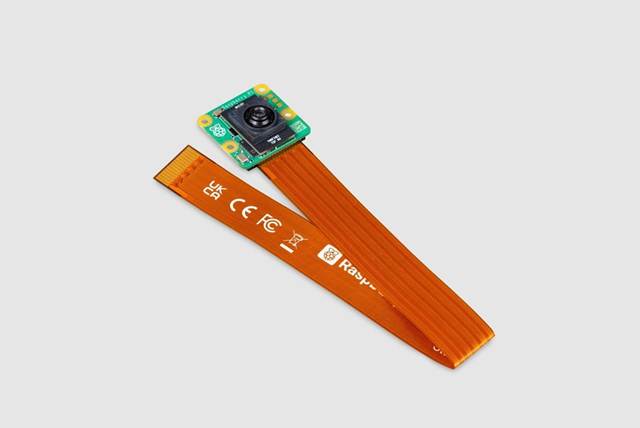
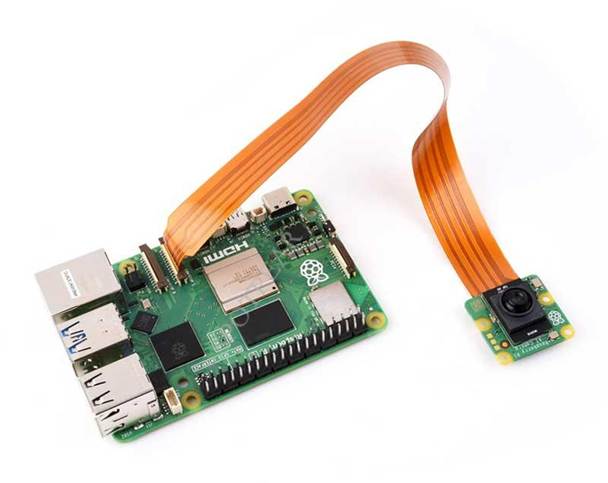
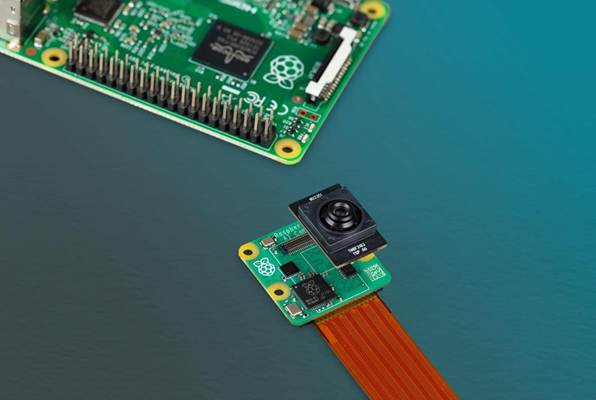
There is a serious shift in how AI helps machines interpret the world around them. From personal to industrial robots, machines’ ability to ‘see’ is improving drastically. One of the biggest products attracting developers and tech aficionados is the Official Raspberry Pi AI Camera.
The AI Camera is a small, low-cost, computer vision and edge AI device. This intelligent camera can perform AI tasks within the sensor, unlike standard video cameras.
For those interested in robotics, surveillance, automation, IoT and AI, this camera can change the way you design systems.
This article will give a comprehensive report on the new Official Raspberry Pi AI Camera. It will discuss the features, the technology behind it, the applications you can use it for, the pros and cons of the AI Camera, and, lastly, why this device is gaining so much attention among AI products slated to gain mass appeal in 2026.
What is the Official Raspberry Pi AI Camera?
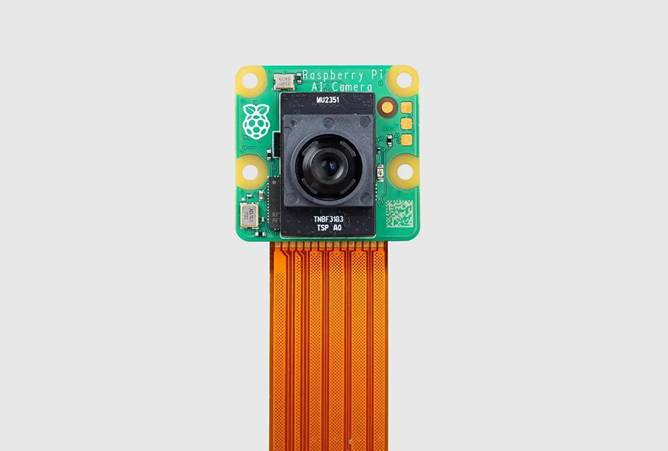
This Official Raspberry Pi AI Camera is a module that enables AI on Raspberry Pi systems and is built around the Sony IMX500 intelligent vision sensor.
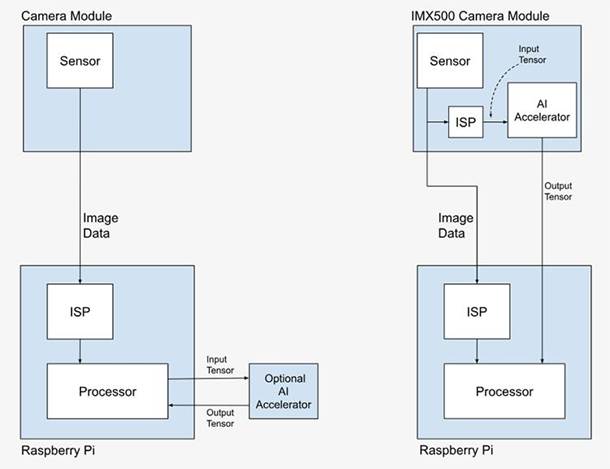
Unlike traditional image-capture devices, this AI camera can run machine learning models directly on the sensor. This is an Edge AI technology.
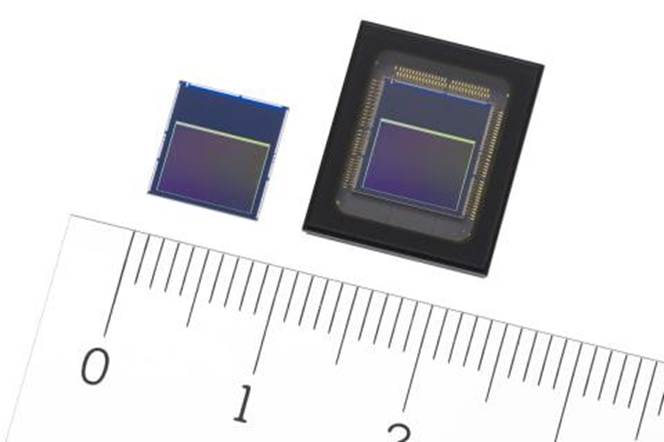
The camera can:
- Identify objects
- Identify people
- Monitor activity
- Evaluate environments
- Run AI functions in real time
And it can do this all without routing every picture to the main Raspberry Pi processor.
Why This Camera is the Best
Normally, AI camera systems require either GPUs or the cloud to perform AI functions, which requires:
- More electricity
- More Internet
- More expensive materials
- Longer delays before processing
The Raspberry Pi AI Camera bypasses all of this with AI processing located on the camera sensor itself.
The Sony IMX500 sensor is made of:
- Image processor
- Neural processing engine
- AI accelerator
- Vision intelligence system
From this, real-time AI reasoning can occur directly in the camera hardware.
Taking It Apart
f(x)=Capture→AI Analysis→Detection→Outputf(x)=\text{Capture}\rightarrow\text{AI Analysis}\rightarrow\text{Detection}\rightarrow\text{Output}f(x)=Capture→AI Analysis→Detection→Output
It’s pretty simple, and it’s very precise.
Step 1. Capture an image
The camera captures both photos and videos with the same quality as the 12MP sensor.
Step 2. AI Analysis
The frames can be interpreted immediately with the AI hardware.
Step 3. Detection
The frames are interpreted immediately using both machine learning and AI.
Step 4. Output
This creates the system’s bandwidth and the amount of information diverted to the Raspberry Pi.
This AI Camera becomes very efficient.
Set of Apparatus
| Features | Descriptions |
| Sensor | Sony IMX500 |
| Resolution | 12MP |
| FOV | 76 Degrees |
| AI Capability | Integrated Embedded AI |
| Interface | CSI Camera Connector |
| Supported Platform | Raspberry Pi |
| Main Tech | Edge AI |
Most Predominant Features of the Official Raspberry Pi AI Camera
1. Embedded AI
This is certainly the camera’s biggest coding discipline.
The camera performs AI processing before sending videos to the CPU. This increases speed and efficiency.
Possibly an example:
A smart security system can instantly detect a person’s presence without sending data to the cloud.
2. Real-Time Object Detection
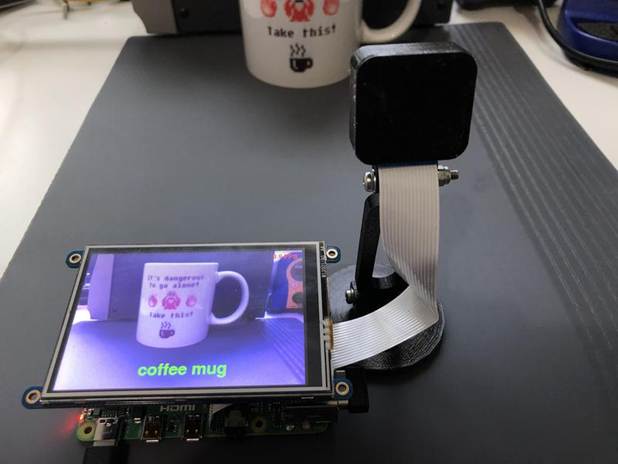
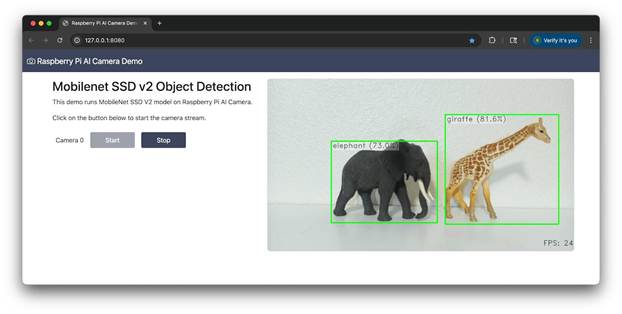
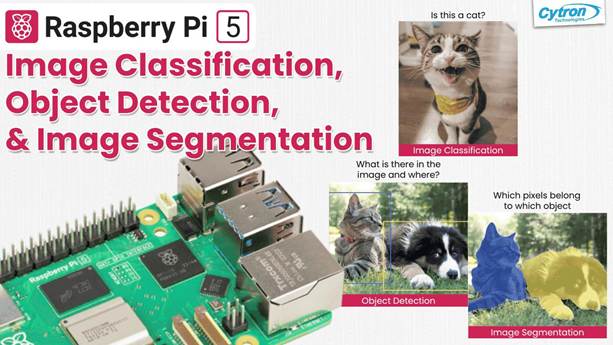
The camera does surveillance by recognising:
- Humans
- Vehicles
- Wildlife
- Merchandise
- Motion
For smart surveillance systems, that’s ideal.
3. Low Power Consumption NEdge
AI can work while the Raspberry Pi chipset is on, thus saving performance and power.
Applicable to:
- Devices that depend on a battery
- Potential moving systems
- Intelligent IoT architecture
4. High Quality Imaging With its 12MP Sony sensor, image quality is clear and detailed.
AI models build stronger recognition and reasoning on those.
5. Simple Integration and Compactness Integrating the camera with Raspberry Pi is made easy by the CSI interface.
Surely, you will have no issues as a beginner.
Real World Examples
Home Smart Security
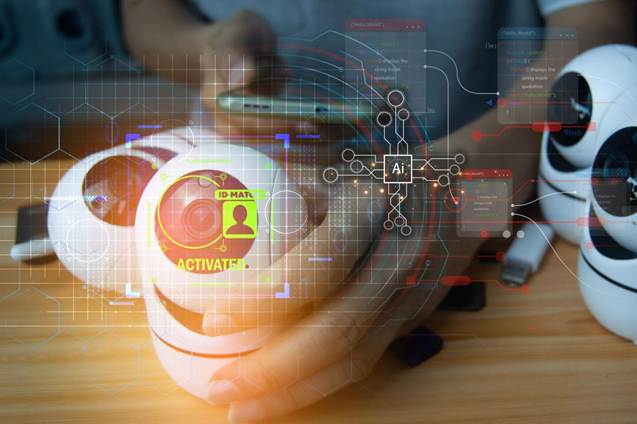
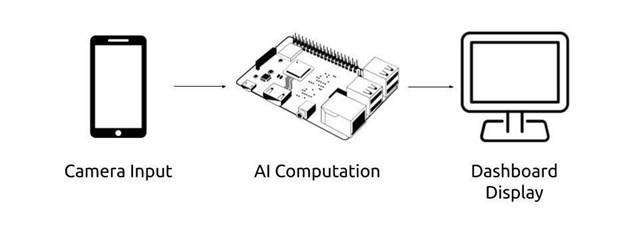
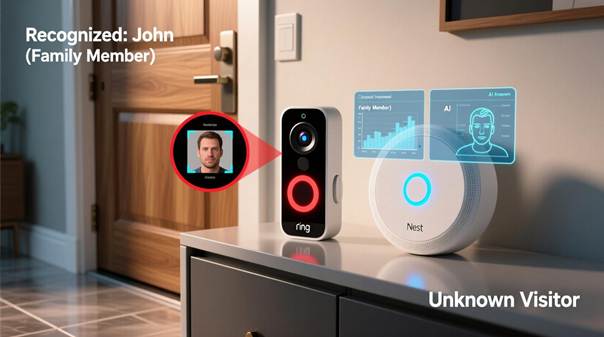
The camera uses intelligent algorithms to detect threats and facial recognition to send real-time alerts.
Consider:
A smart doorbell can recognise both family and unknown visitors.
Robotics:
Robotics combine intelligent algorithms with vision systems to function in their environments.
Raspberry Pi AI Cameras assist robots.
- Obstacle avoidance and detection
- Object recognition
- Path navigation
- Human following
Smart Retail
AI Cameras can be used in retail stores to monitor:
- Customer count
- Foot traffic
- Shelf stock
- Store safety
Industrial Automation
AI vision systems can be used in factories for quality control.
Consider:
The camera can prove useful for the automated detection of broken products along production lines.
Agriculture
Farmers can use AI vision systems to monitor the following:
- Livestock
- Crop health
– Automated irrigation systems
Raspberry Pi AI Camera Has This Over Others
AI Computer Vision with Raspberry Pi AI Cameras
A variety of computing can be done quickly.
- The sensors themselves handle the computing.
Improved safety and privacy
All computing takes place on-site.
Thus, the need for cloud-based computing is eliminated.
Less expensiveness
No need for high-cost, high-performance GPUs.
Less reliance
Less need to be connected to Wi-Fi.
Easy for beginners
Introductory learning for AI and computer vision.
Understand This:
- More is required than just the camera.
- The higher-end GPUs are deemed useful.
- High-level AI models require advanced computation.
- AI models on edge devices are species restricted.
- There is a learning control.
- No advanced programming is required.
Top DIY Ideas
AI Smart Doorbell
Recognise guests with face recognition.
AI Traffic Monitoring System
Count cars automatically.
Smart Attendance System
Track attendance with facial recognition.
AI Pet Monitor
Monitor pet behaviour indoors.
AI Retail Counter
Track customers and inventory.
What Makes This Camera So Exciting to Developers

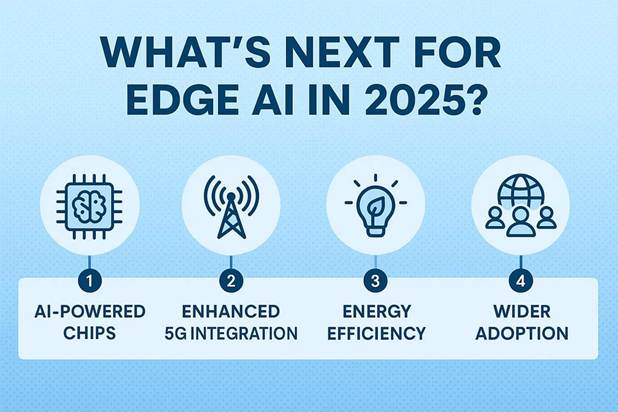
Edge AI is the biggest driver of the excitement. AI is shifting from a cloud-based model to intelligent processing on the edge.
This camera is a practical realisation of that vision.
Developers can build intelligent AI systems inexpensively and with less power consumption.
Who should consider purchasing this camera?
This camera is best suited for:
- Engineering students
- AI developers
- Robotics enthusiasts
- IoT developers
- Smart home creators
- Researchers
- Entrepreneurship incubators
This camera is one of the best ways to start learning practical AI.
The future of Edge AI Cameras
Edge AI Cameras will quickly invade numerous market domains.
Future Edge AI Cameras will find use in:
- Automated and intelligent drones
- Intelligent robotics
- AI systems for industry
- Intelligent AI systems for healthcare
- Automated driving systems
- Smart city systems
The Official Raspberry Pi AI Camera is a precursor to a more intelligent future.
Final Thoughts
The Official Raspberry Pi AI Camera is not just a camera module.
With low power consumption and Edge Computing features, combined with AI and Real-time processing, the Official Raspberry Pi AI Camera ranks among the premium Raspberry Pi models.
If you are embarking on a journey into artificial intelligence, the Official Raspberry Pi AI Camera module is a great starting point, as it offers a wide range of capabilities.
AI is penetrating most industries, and this will soon become the norm, especially amongst tools for Smart Robotics.
official link: – click here
FAQs
Q1. What makes the Raspberry Pi AI Camera so special? What is Edge AI?
Cameras equipped with Edge AI technology can perform AI modelling directly using the camera’s sensor.
Q2. Does the Raspberry Pi AI Camera require Internet?
No. AI use, in most cases, is offline and can happen without an Internet connection.
Q3. Is AI camera use beginner-friendly?
Yes. Raspberry Pi provides beginner-friendly scaffolding in its documentation and community.
Q4. What is detectable using this AI camera?
Images of various categories are detectable. For example, the camera can see and recognise objects and people, and can perceive movements and recognise the categories of animals and vehicles.
Related Post: – Sony PlayStation 6: What Gamers Can Expect Next? – aziztechsolutions.com
1 thought on “Raspberry 1st Pi AI Camera. Edge AI and Smart Vision.”