
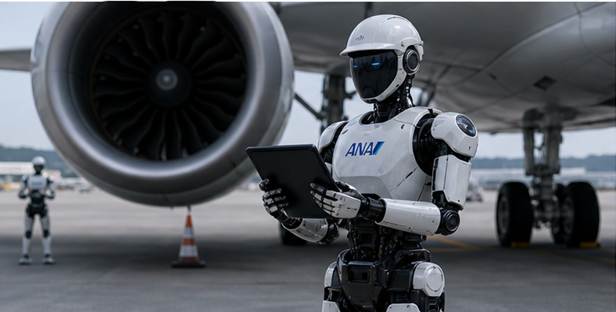

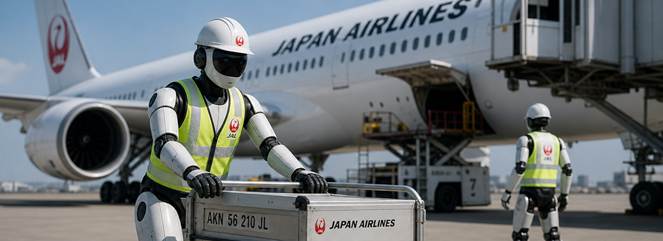
The development of aviation hubs is changing rapidly. Technological reinvention is being spurred by surging volumes of travellers, labour shortages and strict compliance requirements. The capital of Japan is experimenting with anthropomorphic machines that pilot robotics experts and aviation management bodies in carrying out logistical activities on the tarmac. This operational point can essentially transform airport operations over the next decade.
The Dawn of Robotic Ground Crews
Haneda Airport in Tokyo, which handled more than 91 million passengers annually in 2025 (making it the third-busiest aviation hub in the world), is leading a revamp with global ramifications. The deployment of Android units to Japan Airlines’ ramp services teams in early May 2026 was in response to the growing workforce shortage and the increasing number of visitors to Japan.
Why Airports Need Robots
There are three obstacles to aviation hubs: workforce shortages, cost increases, and safety requirements. Luggage handling, cabin cleaning, cargo loading, and equipment movement are repetitive and strenuous (Apron tasks). Worker fatigue increases error rates. The humanoid robots provide long-lasting endurance, high precision of compliance, and minimisation of hazards.
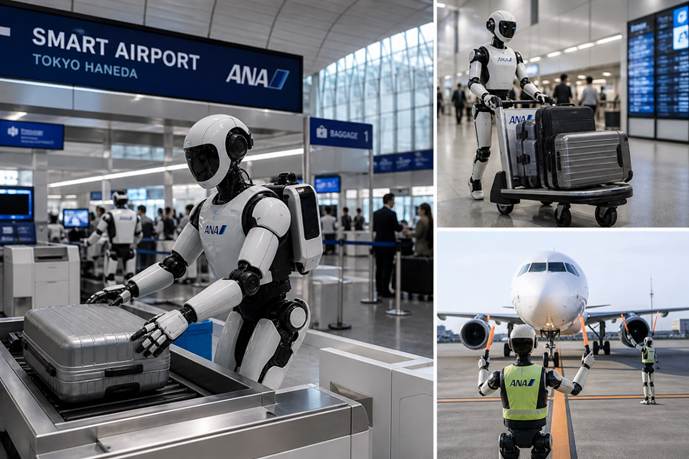
Why Robots, Why Now?
- The aviation industry in Japan is facing a labour crisis due to population decline, strict immigration restrictions, and rising tourism.
- GMO AI and Robotics CEO Tomohiro Uchida notes that although airports appear automated, operating them still requires significant labour.
- Japan Airlines is using robots to address staff shortages.
- Unitree G1 humanoids (1.2m, 35kg, 7km/h) are being trialled in 2028 at a cost of about $13,500 and are ready to scale should the trial be successful.
Tokyo’s Robotic Experiment
Humanoid robots are being publicly tested in Asia’s busiest aviation hub, Haneda. These androids replicate human gait and dexterity, and can walk, carry cargo, and interface with equipment designed for human operation.
This is important because almost all airport infrastructure is not mechanised but anthropocentric. A bipedal design avoids costly retrofitting.
All Nippon Airways and other airlines are leading these assessments. The aim is twofold: reducing personnel workload and aircraft turnaround times.
What These Robots Can Do
Humanoid robots are moving from the lab to actual use.
- Drag luggage to different terminals.
- Facilitate the loading of freight.
- Sanitise aircraft interiors.
- Provide equipment and accessories.
For example, automated units can transport heavy carts indefinitely without exhaustion. Their production is constant over an infinite number of cycles. Also, robotic systems can sustain operations without breaks during overnight shifts with fewer crews.
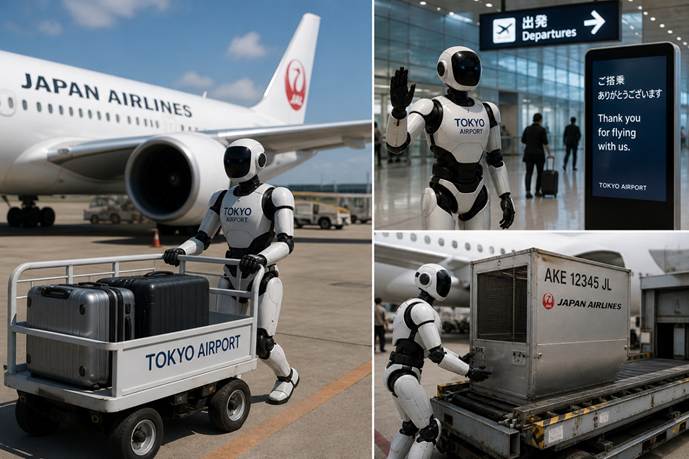
What These Mechanical Workers Will Actually Do
Robots will not replace human staff but will support them with repetitive ground duties.
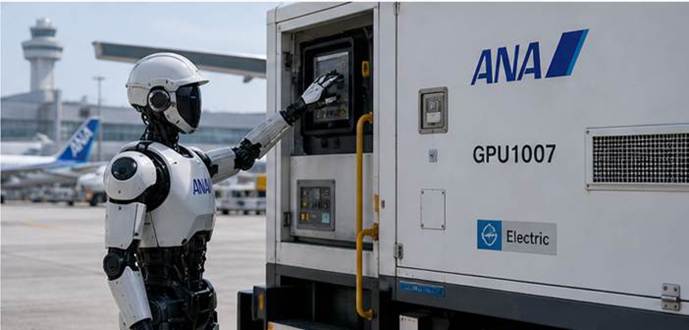
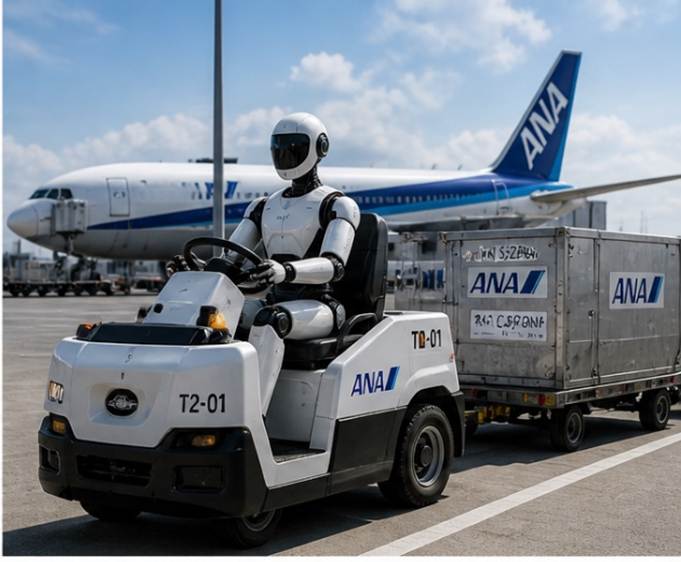
First jobs: baggage loading, dolly manoeuvring, stair placement and power/climate unit management.
Subsequent growth into cabin cleaning to lighten physically strenuous workloads.
Yoshiteru Suzuki, president of the ground service, insists on the benefits of cooperation: fewer workers, not job losses.
All safety-critical decisions remain under the ultimate control of human supervisors.
Technology Behind the Robots
The current self-directed platforms are built on multiple technological layers. Situational judgement is based on neural computation; physical objects are detected and categorised via optical perception systems; stability and motion are controlled by self-optimising routines; talent is nurtured through self-selection in response to exposure. These systems dynamically reroute when pathways are impassable and autonomously rectify positioning errors, without external stimulus. In aerospace settings, this transition signifies the shift of AI from virtual environments to live, hardware-integrated operations.
Benefits of Robotic Ground Operations
- Enhanced Operational Efficiency
The spirit of autonomy in robotic systems enables 24/7 operation, thereby greatly increasing aircraft ground-handling cycles and helping reduce turnaround time.
- Cost Optimisation
Large financial investments are conventionally directed to the costs of the manual workforce; the implementation of robotic automation results in significant long-term savings in those costs.
- Risk Mitigation
Mechanised forces can safely conduct high-hazard missions — including load-bearing and proximity operations near operating propulsion systems — thus protecting human forces.
- Process Uniformity
Automated mechanisms, unlike human operators, do not degrade due to fatigue and can therefore maintain exceptionally accurate, cyclic, repetitive work processes.
Challenges That Still Exist
The technology presents a possibility, but it is not perfect.
Financial Constraints
Developing and deploying humanoid robots requires large initial investments.
Unpredictable Settings
Aviation facilities are subject to dynamic conditions. Changes in the atmosphere, unpredictable pedestrian traffic, and fixed schedules create considerable obstacles.
Human Proximity Operations
Machines need to operate safely alongside personnel and therefore require complex protective designs.
Sustained Upkeep
Routine hardware servicing and regular software updates are among the inevitable operations.
However, growth is gradual.
Practical Illustration
Imagine that an aircraft lands after midnight with a small number of ground crew. A group of humanoid robots takes over:
- One of the units handles the removal of baggage and freight.
- A second one cleans the interior of the passenger compartment.
- A third is used to carry auxiliary equipment.
In seconds, the plane is ready to turn around and take off again.
This working speed has been proven to reduce schedule delays and increase traveler satisfaction.
Impact on Job
Fears of workforce displacement are greatly exaggerated. Although mechanisation will eliminate monotonous and physically exhausting tasks, it will also create entirely new occupational areas. The role of a human being will shift to a more orchestrated one, with greater emphasis on supervision and strategy rather than on implementation. Aviation infrastructure will always require irreplaceable human talent and field experience.
Emerging Roles:
- Robotic maintenance and calibration technicians.
- AI system management staff.
- Aviation operations intelligence analysts.
- Strategic decision-making coordinators.
- Human-autonomy interface managers.
Global Implications
Tokyo is the frontrunner, but international competitors are keeping a close eye on it. Parallel systems are being tested in hubs across America, Europe and the Gulf. Success in Tokyo would forge a worldwide benchmark.
The intelligent terminals will become a key differentiator for the industry. Passengers will prefer any hub that can provide faster, safer and smoother transit.
Future Possibilities
Currently, aviation logistics focuses on activities on land. But future projections are very far beyond the current boundaries.
- Self-governing units that guide travelers in concourses.
- Self-operating screening procedures
- Luggage monitoring systems Algorithms.
Imagine an aerodrome in which you are guided by intelligent machines from registration to embarkation.
Active trials are already on.
What This Means for You
Soon, frequent flyers will see major changes in air travel.
- Accelerated boarding procedures
- Minimised flight delays
- Enhanced aircraft sanitation
- An excellent overall passenger experience.
This changing landscape presents new opportunities in artificial intelligence, robotics, and aerospace engineering for students and working professionals alike.
Acquiring knowledge of AI systems and robotic technologies as competencies would be extremely valuable for those planning their future careers.
FAQs
1. Are humanoid robots already working in airports?
Yes. Airports like Haneda in Tokyo are testing humanoid robots for real ground operations such as baggage handling and cleaning.
2. Will robots replace all airport workers?
No. Robots will handle repetitive tasks. Humans will focus on supervision, management, and complex decision-making.
3. How do robots navigate busy airport environments?
They use AI, sensors, and computer vision to detect obstacles, understand their surroundings, and make real-time decisions.
4. When will smart airports become common?
Many airports are already testing these systems. Wider adoption can happen within the next 5 to 10 years.
Airports are entering a new phase. Tokyo’s experiment shows what is possible. The airport of the future is not coming. It is already being built.