
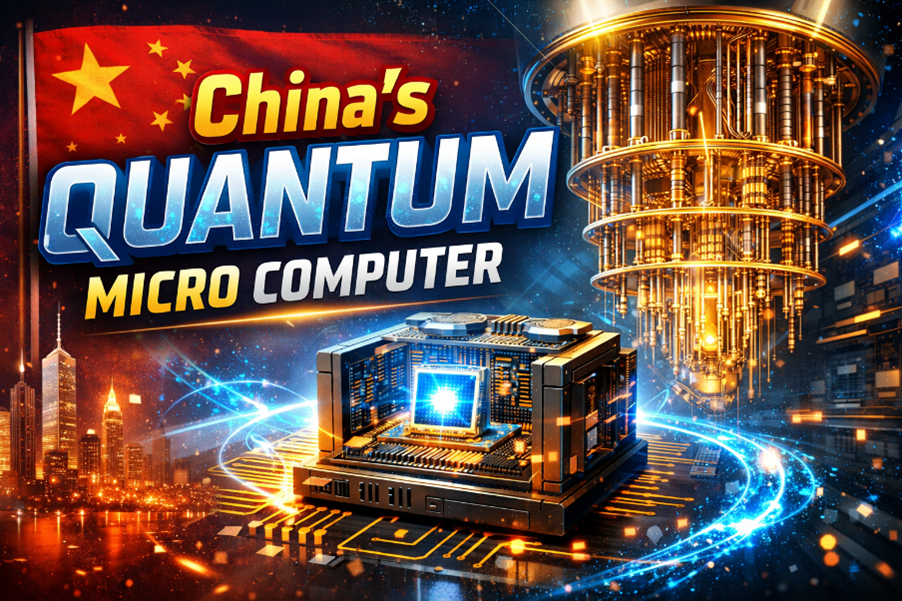

China is rapidly becoming a global leader in quantum computing. The country is actively seeking next-generation computational infrastructure with significant state funding and state-of-the-art research centres. One of the most interesting developments is the Quantum MicroComputer in China. This technological breakthrough is set to transform AI and cybersecurity, as well as medicine, finance, and scientific research.
Traditional computing platforms have transformed contemporary society over the past few decades, but they remain limited in addressing extremely complex problems. Quantum microcomputers hold the promise of reducing year-long computations to just a few minutes or seconds and initiate the radical era of computation.

What Is a Quantum Microcomputer?
A quantum microcomputer is a small quantum computing device, which uses quantum mechanical effects instead of classical binary logic in performing computational tasks.
Some important differences with traditional computing:
Classical bits – Can be in one of two discrete states, either 0 (off) or 1 (on).
• Quantum bits (qubits) — Take advantage of superposition to have two or more probabilistic states all at the same time, as |human|>|human|>• Quantum bits (qubits) — Use superposition to have two or more probabilistic states at the same time, denoted as |human| ā|0| + β|1|.
The strategic focus of China: National efforts are to scale large-scale quantum systems down to deployable, scalable systems that can be integrated into academic research centres, industrial use, and future consumer-usable technologies.
Why China Is Investing Heavily in Quantum Computing
The field of quantum computation has become a strategic technology and is of equal importance to artificial intelligence and semiconductor fabrication. Beijing understands that leadership in this area may provide transformative leverage in key areas:
- Defense and intelligence infrastructure.
- Banking and cryptography systems.
- Frontier scientific inquiry
- Pharmaceutical molecular modelling
- Extraterrestrial missions
- Machine learning systems of the next generation.
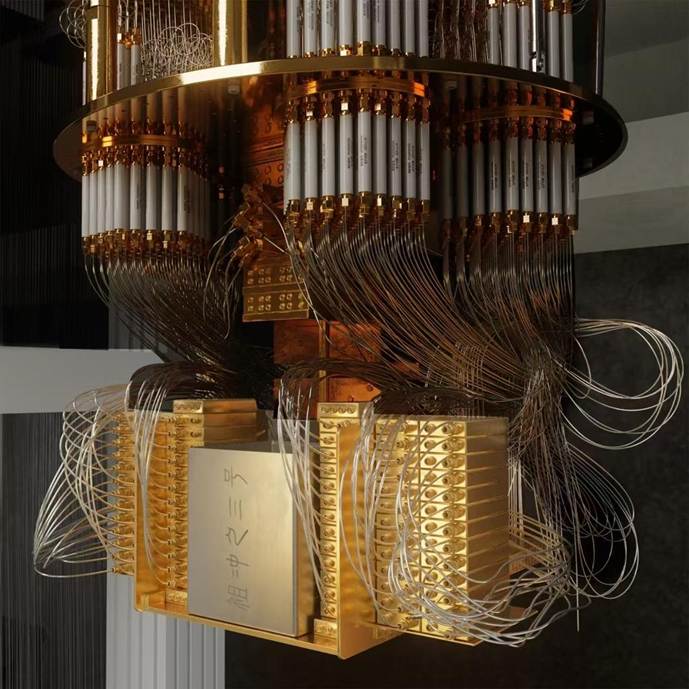
To achieve this advantage, government funding in the form of multibillion-dollar grants has been directed to quantum programs that promote close collaboration among academic research, commercial technology start-ups, and government research centres. Significant achievements include the Jiuzhang photonic system, which demonstrated quantum advantage in solving specific computational problems, and the Zuchongzhi superconducting chip, a breakthrough in hardware. Together, these developments indicate China’s conscious effort to confront American dominance and compete with other established technology giants globally on an even playing field.
How Quantum MicroComputers Work
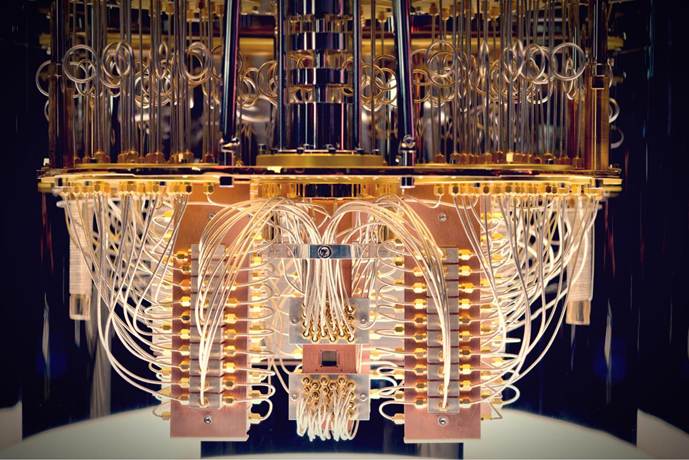
Quantum microcomputers are based on three fundamental quantum mechanical processes:
- Superposition — Qubits, in contrast to classical bits that are constrained by being in 0 or 1, can be in many states at once, enabling many more computations.
- Entanglement Entities, called qubits, become inseparable; a modification in any one causes an immediate change in its counterpart wherever it is in space, which is highly efficient in processing data in parallel.
- Quantum Interference — Intended amplitudes manipulation of particular solutions reinforces effective solution paths and suppresses erroneous ones, significantly speeding up optimisation and simulation procedures.
China’s Quantum Breakthroughs
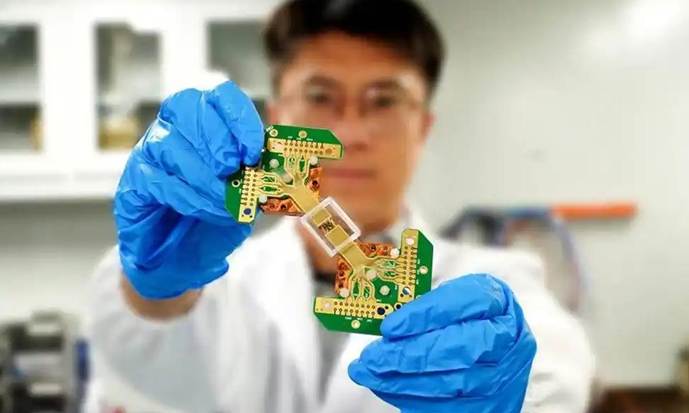
China has achieved significant milestones in quantum innovation.
Satellite-Based Quantum Communication
The country launched the first satellite in the world that is used to communicate quantumly, Micius. It demonstrated quantum-mechanical encryption methods that enable communication channels with unprecedented intrusion resistance.
Advancement in the Speed of Quantum Computations.
The country-based research teams claimed a quantum-computational advantage with light-based quantum architectures. Their device was claimed to perform niche computational tasks much faster than conventional high-performance computing systems.
Development of a National Quantum Network
Plans are underway to build a nationwide quantum-cryptography network to connect major cities.
Such efforts cement the nation’s leadership in the field of progressive computing worldwide.
Application of Quantum MicroComputers in the real world.
Quantum computing is not just in theory, but has practical use in a variety of areas:
Artificial Intelligence (AI) is an accelerated, optimised form of machine learning that typically consumes large volumes of data, and healthcare AI can analyse millions of patient records in minutes to identify disease trends more quickly than traditional systems.
Drug Discovery:
- Simulates drug interactions at a high level of accuracy, condensing the years of drug testing in pharmaceutical companies into a shorter time frame in cancer- and antiviral-drug-development.
- Financial Modelling, in turn, allows analysis of complex market variables in real-time and enhances risk assessment and portfolio optimisation when dealing with volatile markets.
- Climate Research — Helps in increasing the computing power to forecast the weather and other environmental features and enhance the accuracy of the forecast.
- Cybersecurity — Propels the study of quantum encryption to communication networks with resistance to hacks and unauthorised access.
Difficulties with Quantum MicroComputers.
Ongoing Hardships in Quantum Computing:
Qubit Fragility: Quantum bits are very susceptible to thermal noise and electromagnetic noise, both of which can easily cause inaccuracies in calculations.
Error Mitigation: It is necessary to implement robust error-correction schemes that maintain computational fidelity across all quantum operations.
Infrastructure Cost: Cryogenic cooling and custom hardware are prohibitively expensive to deploy.
Scalability Barrier: It is still not an engineering challenge to scale qubit arrays without compromising coherence or precision.
International Investment: China and other countries are directing significant resources toward overcoming these impediments.
How Quantum Computing Differs From Classical Computing
| Classical Computing | Quantum Computing |
| Uses bits | Uses qubits |
| Processes sequentially | Processes multiple states simultaneously |
| Limited for complex simulations | Excellent for complex calculations |
| Common in daily devices | Still experimental |
| Lower computational power | Extremely high computational potential |
Such a difference may transform the technology industry over the coming decades.
The World Quantum Race.
Quantum computing has become a stiff world competition. Key countries investing huge resources in this area are:
• China
• United States
• Canada
• Germany
• Japan
In the meantime, tech titans such as IBM, Google and Microsoft are in stiff competition to develop commercially viable quantum platforms. The advantages of Beijing stem from long-term federal funding commitments and the state’s integrated, coordinated scientific activities.
Would Quantum MicroComputers be a substitute for traditional computers?
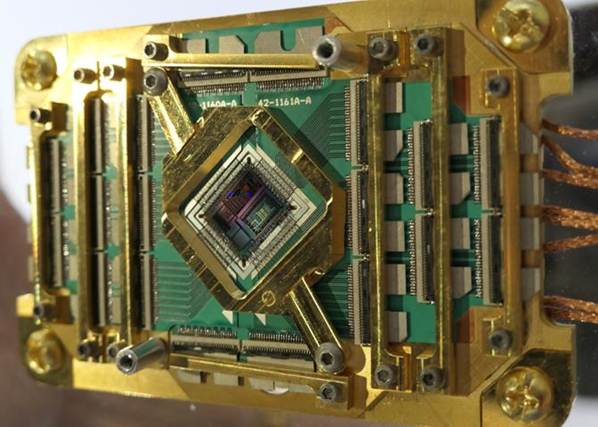
Quantum computing is not aimed at completely replacing classical machines but is devoted to solving computationally intensive, highly specialised problems. Everyday processes will be left to the traditional processors which will include:
- Web surfing and streaming media.
- Suites of games and productivity.
- Routine office workflows
The future as we envision it is one of hybrid architecture with quantum microprocessors, not replacing traditional computing infrastructure.
Future of China: Quantum MicroComputer.
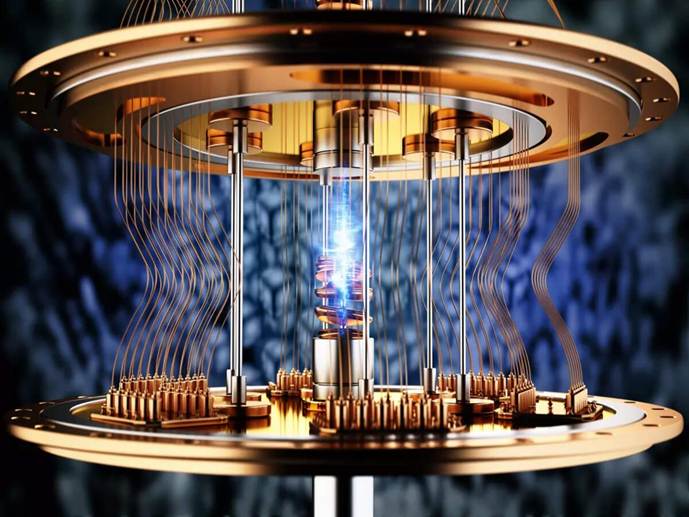
The prospect is very bright. Experts expect that quantum technologies will transform various fields in the next 1-2 decades:
- Healthcare and drug discovery.
- Autonomous transport networks
- Cryptographic defence systems
- Machine-learning architectures
- Scientific data modelling
- Intelligent urban infrastructure
The continued investment by Beijing is an indication of Beijing’s strategic intent to achieve next-gen computational dominance. If scientists can develop scalable, stable quantum processors, civilisation will enter an information age like no other.
Final Thoughts
The Quantum MicroComputer of China is not just a laboratory wonder but a turning point in the world’s technological development. As quantum architectures gain strength and computational power, global industries are about to be disrupted.
The quest for quantum dominance has not only left the world of speculative fiction but has also entered the realm of reality. Beijing is hastening its geo-political presence to design this new paradigm.
Quantum Microcomputer: – Microsoft Quantum | Homepage
FAQs
1. What is China’s Quantum MicroComputer?
The Quantum MicroComputer in China refers to the new, high-level, small-scale quantum computing systems that Chinese researchers and institutions are developing using qubits and quantum mechanics.
2. What is the importance of quantum computing?
Compared to conventional computers, quantum computing can solve highly complex problems much more quickly. It is used in A.I., medicine, cybersecurity, and science.
3. Does China have the best quantum computing?
China is viewed as one of the world’s leaders in quantum research, thanks to significant investments, quantum satellites, and quantum supremacy breakthroughs.
4. Will quantum Microcomputers be able to substitute laptops and smartphones?
No. Quantum Microcomputers are primarily intended for specialized tasks in science and industry. There will be a need for traditional computers that will still be used daily.
Related Post: – 4th Quantum Computers
Related Post: –Samsung Galaxy Z Fold7 5G
2 thoughts on “7 Mind Blowing China Quantum Microcomputer Secrets”