
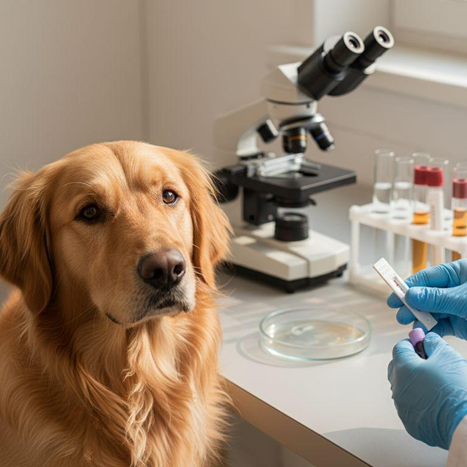
A Long Partnership in Research
Canines are essential research partners that have been involved in research more than a century long. Their biological similarities with human biology allow scientists to research complex medical-related conditions with even more accuracy. Of great importance to landmark medical discoveries, such as the isolation of insulin, were experiments on dogs. Currently, such animals still help scientists to discover disease pathogenesis and determine the effectiveness of a therapy in natural biological conditions.
Behavioral Research and Cognitive Studies
Dogs have widely been used in behavioral research long beyond the medical field. Their fifteen-thousand-year history of coexistence with humans makes them highly appropriate in studying the cross-species interaction. Experimental studies have shown that dogs have the ability to detect emotional warmth, are able to use basic logic and understand basic numeric concepts. Further, scientific investigation shows that there are similarities in the functions of the linguistic processing in canines and Homo sapiens and thus sheds light on the evolutionary history of communicative systems.
Medical Detection and Diagnosis The dogs have an extremely advanced sense of smell. These animals possess millions of special scent-detecting cells which enable them to detect even slight biochemical changes in human physiology. Medical detection dogs have already been trained to detect many types of pathologies- such as malignancies, malarial infections and the presence of SARS-CoV-2. Also, they are able to detect neurodegenerative diseases like the Parkinson syndrome. The amazing accuracy of these trained animals has led scientists to develop artificial diagnostic devices that are designed in the same manner as the canine biological processes.
Veterinary Science Advancements
Dogs play a great role in advancing veterinary medicine. Research on the spontaneously developed tumors in dogs provides important information when used in treating human beings in the field of oncology. To test immunotherapeutic and precision therapeutic approaches, comparative oncology makes use of these naturally occurring malignancies. The collaboration between animal health professionals and human medical professionals creates novel treatment modalities with a win-win situation on both the dogs and the human subjects.
Ethical Care and Future Direction
Other stringent ethical guidelines protect dogs used in research studies. Rules stipulate proper living conditions, humane treatment and welfare provisions upon completion of the experiment. Many of the animals that have been scientifically involved switch to domestic settings after the scientific intervention is complete. Substitute methodologies like computational simulations and tissue-based studies are increasingly involved in research. However, canines are still important in the study of complex physiological processes which cannot be fully replicated in laboratories.
Such animals continue to make their contributions to the scientific activities quietly. Their participation allows medical advancements, broadens the knowledge and creates improved interventions that are beneficial to both veterinary and human health care.