

With the latest advancements and trends in the smartphone industry, the focus has vastly shifted. The modern-day processors and computing modules are being evaluated.
CCompared on different bases. Now, the metrics that define the modern-day processors are focused on real-time learning, battery management and optimisation, and machine learning.
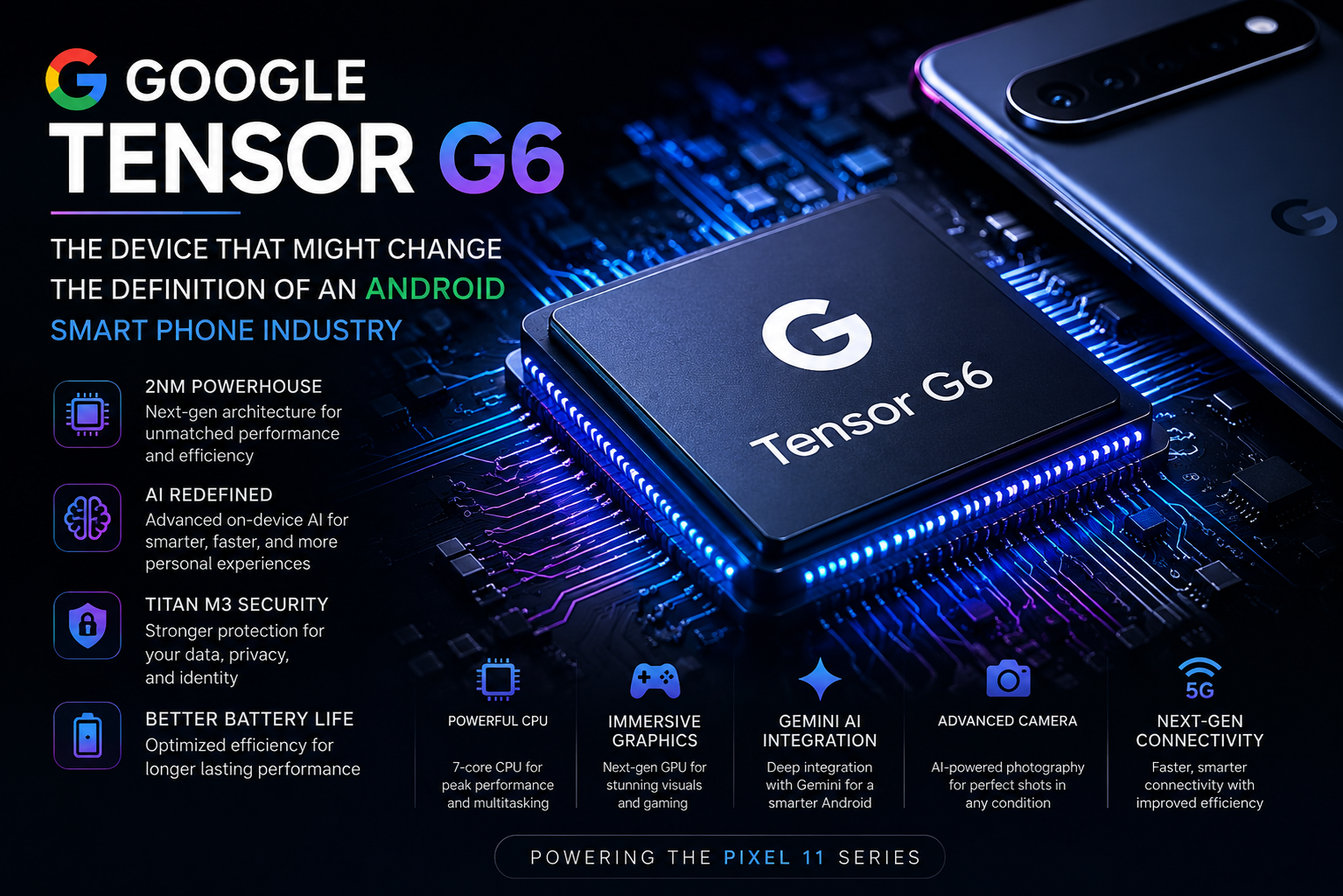
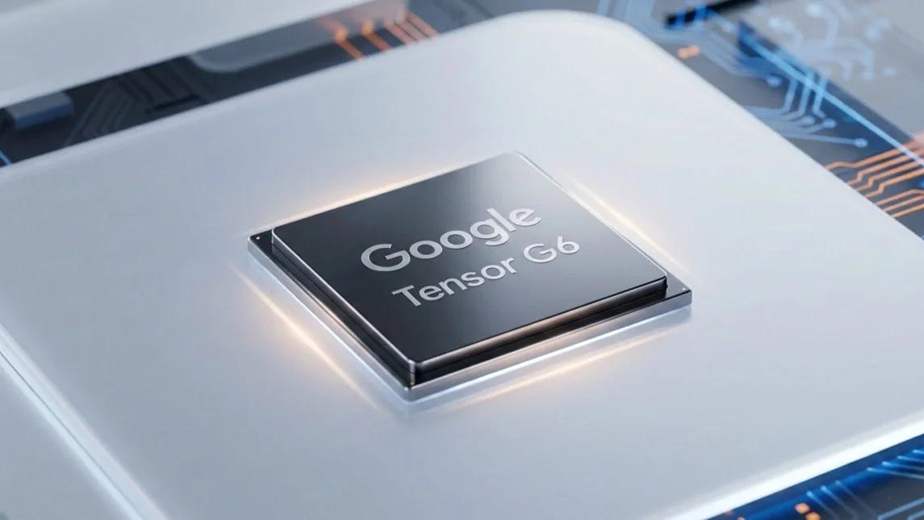
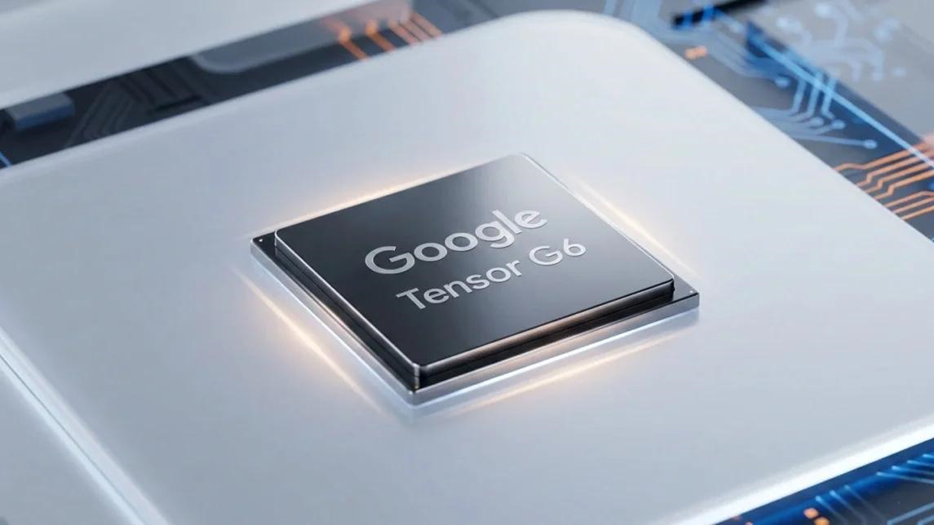
The Google Tensor G6 chipset is actually one of the most advanced processors designed for smart phone with a predicted release in the coming 11 series of the Pixel smart phones.
As opposed to other chip makers that tend to focus on chip performance, Google builds Tensor chips with AI functionality in mind. This is why Pixel phones are able to have features such as Magic Eraser, Live Translate, AI call screening, and voice recognition.
With the upcoming release of Tensor G6, it is expected Google is pushing that AI functionality even further.
What Is Google Tensor G6?
Google Tensor G6 is a custom built chip for Google expected to be built in the upcoming Google Pixel 11 lineup.
Google Tensor chips are specifically built for AI functionalities. Unlike Qualcomm and Apple, whose focus are the gaming chip benchmarks to determine chip performance, Google is focusing on AI functionalities that users interact with on a daily basis further breaking down what Google sees as the focus for smartphone processing.
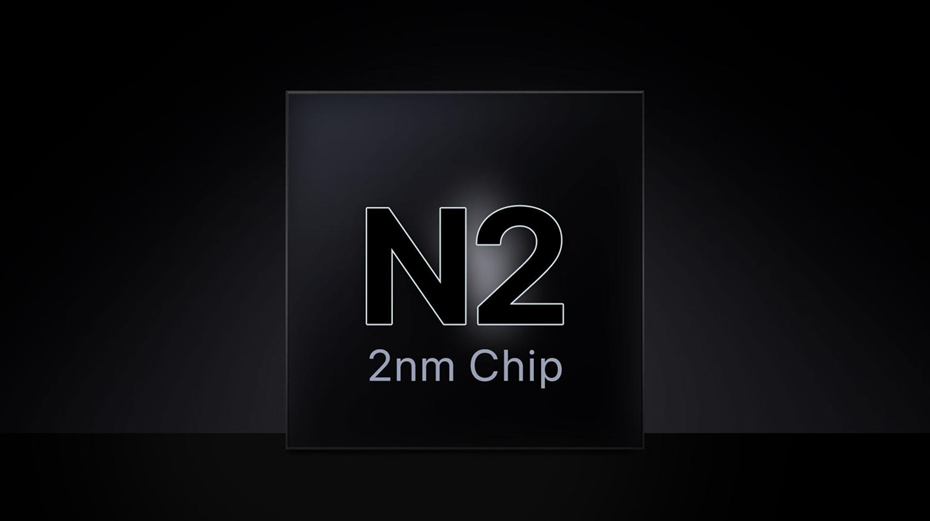
WihG6, Google is looking to move toward chips that are built using a 2nm process. This can significantly improve:
- Overall speed of the chip
- Battery efficiency
- Heating of the chip
- Improvement in AI functionality
- Improvement in the camera with respect to collecting and processing images
Building chips with a 2nm process means companies are using even smaller transistors which means greater efficiency in how chips perform functionality with less battery draw.
This is bound to improve the usability and the relative speed of the average smartphone.
Why Tensor G6 Matters
Most modern chips have enough processing power to perform daily tasks. The more important factor now is how the chips are able to reason with the data the chips are to store.
Tensor G6 chips allow phones to:
- Understand voice commands instantly
- Translate conversations in real time
- Generate AI summaries on device
- Edit videos automatically
- Predict user behavior
- Improve photography using AI models
This will make Google Pixel phones most competitive in the market.
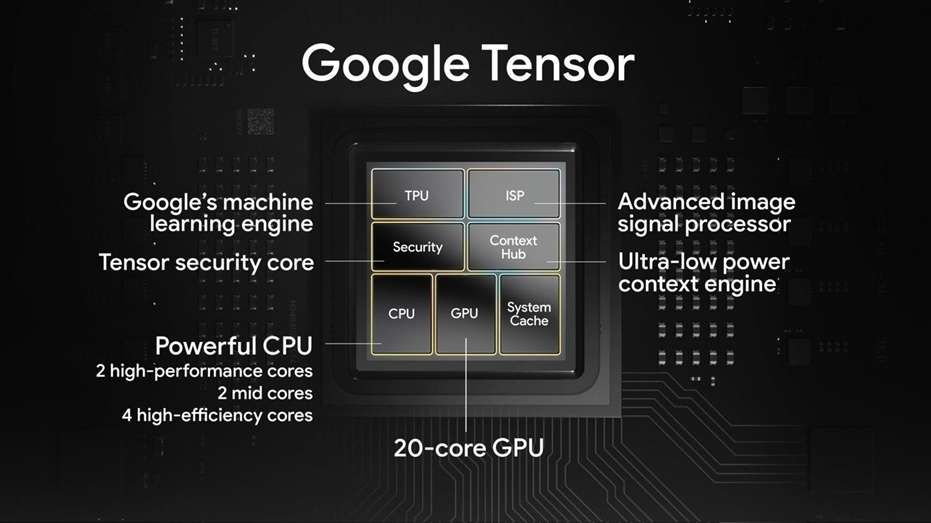
Rumors say the Tensor G6 will have a radically different CPU.
This will likely include:
- 1 Ultra performance core
- 4 performance cores
- 2 efficiency cores
This will make the performance of the Tensor G6 the best when it comes to multitasking.
To give you an idea of how well the Tensor G6 will be able to multitask, just imagine how many applications you would be able to run. You will be able to run a 4K video editor, Gemini AI, a bunch of Chrome tabs, and stream music all at the same time with no lag.
There is expected to be an upgrade to the GPU as well.
This will allow for:
- Gaming
- Video rendering
- AI image generation
- Augmented reality
Considering how demanding games like PUBG Mobile, COD Mobile, and Genshin Impact can be, all of them would be able to run with great performance.
The biggest area that the Tensor G6 will improve on will be AI.


Google could crush its mobile competitors with Tensor G6 chips.
Google has already built AI deeply into Android and Pixel devices using prior Tensor chips. Expect the upcoming Tensor G6 to go even further.
Google may add these AI functions to Android in the future:
1. Smarter Gemini AI Integration
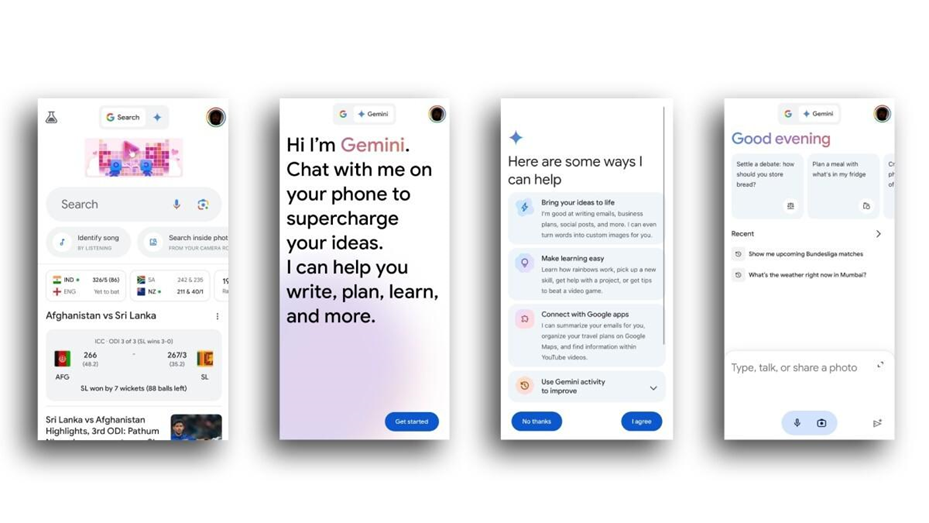
Because of the deep integration of the Gemini AI into the Android OS, users may someday be able to give their phones complex, multi-step instructions. For example, “summarize my emails, schedule meetings, and generate a reply.”
Unlike the current implementation, Tensor G6 could allow many of these tasks to be done right on your phone instead of relying on Google’s servers in the cloud.
The advantages of on-device AI processing are:
- Less dependent on Google’s services.
- Greater privacy.
- Tasks may be done faster.
2. Advanced Real Time Translation
Google is already the leader in translation technology, but improvements to Tensor G6 could make the Pixel phones the best at:
- Translation of spoken conversations in different languages in real time.
- Translation of written documents more accurate and available offline.
- Recognizing different accents.
- Using Voice Cloning and Speech Enhancement.
This technology could be a game changer for travelers and students studying in different countries.
3. AI Photography Revolution
Let’s face it: Google Pixel phones are famous for their computational photography.
But now with Tensor G6, you may be able to take really clear photos of text from really really far away. Google has said that Tensor may allow the phones to use advanced AI to fill in information that is missing. And that isn’t the only improvement.
- AI-enhanced photos may allow you to take videos in the dark.
- AI-enhanced video may allow you to take videos and remove things in them.
- AI may allow Rahul one-click enhancement of videos to make them look really cool with AI-generated backgrounds.
- AI may allow the phones to add real-time improvements to videos that look like they were shot in a movie.
Competitors
While Apple and MediaTek may pose some level of competition to Google with their Tensor chips, the biggest competitor to them will be Qualcomm’s Snapdragon chips
Here’s a potential scenario of a feature showdown:
| Feature Tensor G6 Snapdragon 8 Elite |
| AI Processing Extremely Strong Strong |
| Gaming Good Excellent |
| Battery Optimization Excellent Excellent |
| Camera Intelligence Industry Leading Very Good |
| On Device AI Major Focus Moderate Focus |
| Android Integration Deep Google Integration Standard |
Snapdragon excels in gaming benchmarks, but Tensor G6 may be able to outperform Snapdragon in AI powered tasks.
This is the direction Google is going.
Tensor G6 and Battery Efficiency
Battery life has been one of the major smartphone concerns.
A robust chip is of no use if it drains the battery.
It is believed that the 2nm process may help the Tensor G6 achieve:
- Less battery drain
- Less overheating
- More screen on time
- Quicker AI tasks at a lower cost
Example:
Current flagship phones can noticeably heat up when doing some 4K video recording or gaming sessions. The Tensor G6 may alleviate the overheating with its more efficient thermal engineering.
This is important for content creators, gamers, and even students that use their phones for prolonged periods.
Improved Security Features
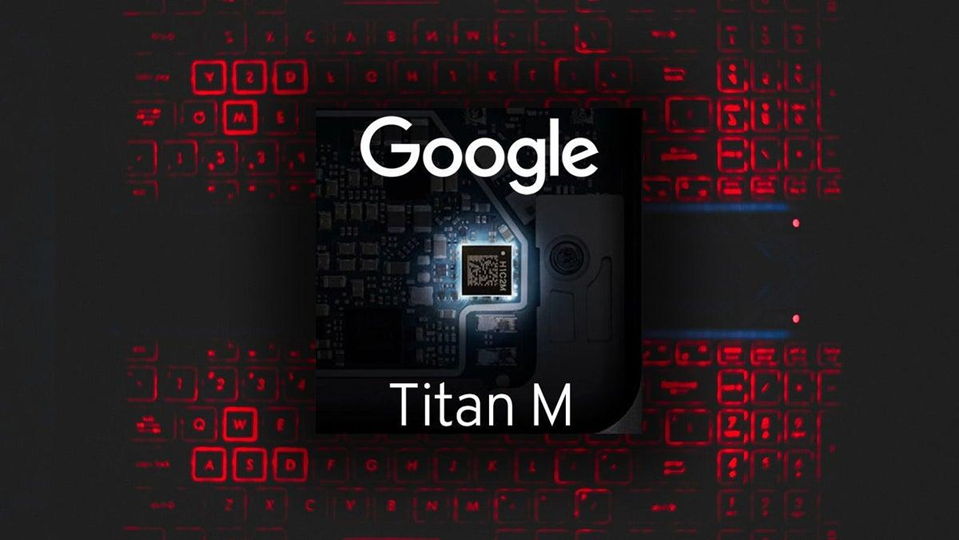


Security is another priority.
Leaks show that Tensor G6 may release with an updated Titan M3 security chip.
Some new features may include:
- Enhanced biometric security
- Advanced encryption capabilities
- More robust anti-malware security
- Improved security for online transactions
- Enhanced phishing security
The surge of cybercrime has made smartphone security a critical area of development, and it is likely that Tensor G6 will be one of the most secure Android processors.
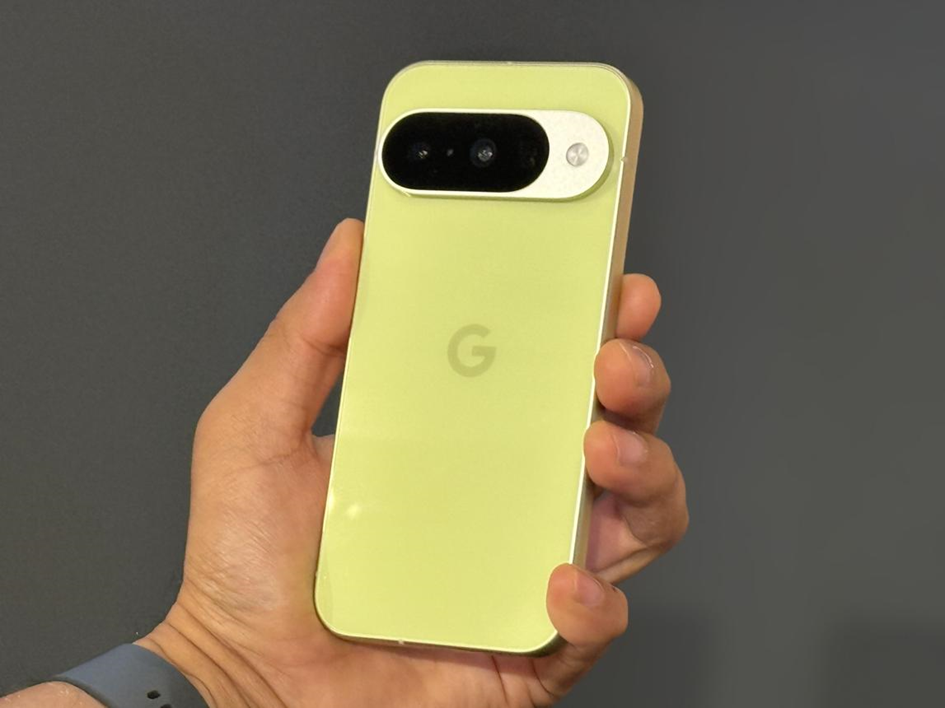
The Pixel 11 Series and Tensor G6 is expected to include:
- Pixel 11
- Pixel 11 Pro
- Pixel 11 Pro XL
- Pixel 11 Fold
The Google Pixel Fold devices may benefit from the new Tensor G6’s improved AI multitasking capabilities.
For example, a foldable device may be able to run live translations from one screen and display notes or presentations on the other, thereby boosting productivity for students and professionals.
Improvement in Gaming Capabilities
Gamers have noted that previous Tensor chips have been critiqued for weakening graphics and throttling.
There is promise that Tensor G6 will improve on these critiques for gaming and will include:
- Consistent frame rates
- Improved ray tracing
- Reduced thermal throttling
- Enhanced GPU with faster rendering
- Improved AI for gaming optimization
Google may use AI to implement frame prediction, which may increase the optimal performance of games.
The Tensor G6 has many exciting improvements in store which will create a more gaming friendly Android.
Possible future applications of Tensor G6 include:
- Automated wallpaper generation with AI
- Summarized notifications
- Assistance that understands contexts
- Command-based multitasking
- Adaptive tutor systems
Example:
The device might anticipate and adjust your settings to not create reminders.
If you have an online class at 8 PM, it might plan to save battery and turn on do not disturb before class.
These one or two step automation features can alter the typical user experience of mobile devices.
Problems Tensor G6 Must Solve
Even with anticipation of the Tensor G6, there are problems for Google to solve.
1. Apple Competition
Apple dominates the mobile silicon market with the A series and great efficiency for their processes.
Google must work on:
Performance
Games
Ecosystems
2. Cooling
Google must be able to offer chips that do not overheat like previous Tensor Chipsets.
3. Trust
For many reasons, the majority of people who have Android phones tend to prefer Snapsdragon.
The Tensor G6 must provide real word improvements rather than make bold AI marketing promises.
Why Tensor G6 may change the game
The Tensor G6 is a proof of change, not just another mobile chip.
The direction of the tech industry is towards:
· AI that is user first
- Tailored computing
- Smarter on-device tech
- Anticipating computing with the aid of natural user interfaces.
It seems that Google is confident that it alone will disrupt the current equilibrium.
If this is the case, the future of smartphones might suggest that we a more capable user assistant than just a form of voice communication.
Although this might alter the way people use to convey their ideas and perform their work and how they engage with other users.
Final Thoughts
Google’s Tensor G6 is one of the most developed and advanced chips Google has to offer for its Android-based devices.
Google’s success for the Tensor G6 will rest on the balance of several factors. These include:
- Innovative AI Development
- Speed and Performance
- Battery Life
- Heat Resistance
- Security Features
The smartphone industry is developing quickly, with AI becoming the biggest competitor.
The Tensor G6 aims to push smartphone technology ahead in the benchmarks that matter.
If Google fulfills the developing capabilities, the Tensor G6 could usher in the smartphone AI era.
Now for a short FAQ
1. What is the Google Tensor G6?
The Google Tensor G6 is artificially intelligent processor set to configure the Pixel 11 series.
2. Which phones will use Tensor G6?
The Pixel 11, Pixel 11 Pro, Pixel 11 Pro XL, and Pixel 11 Fold.
3. Is the Tensor G6 Better than the Snapdragon Chips?
The G6 will focus on AI and Photography, while the Snapdragons will dominate gaming.
4. What is the Tensor G6’s Big Deal?
Its strength is the processors AI that allows for smarter voice assistants and AI photography as well as real-time translation and better personalized service without having to depend on the clouds.
Related Post: – NEURA Robotics 4NE1 Gen 3 – aziztechsolutions.com
1 thought on “Google’s Next AI Revolution in 2026”