
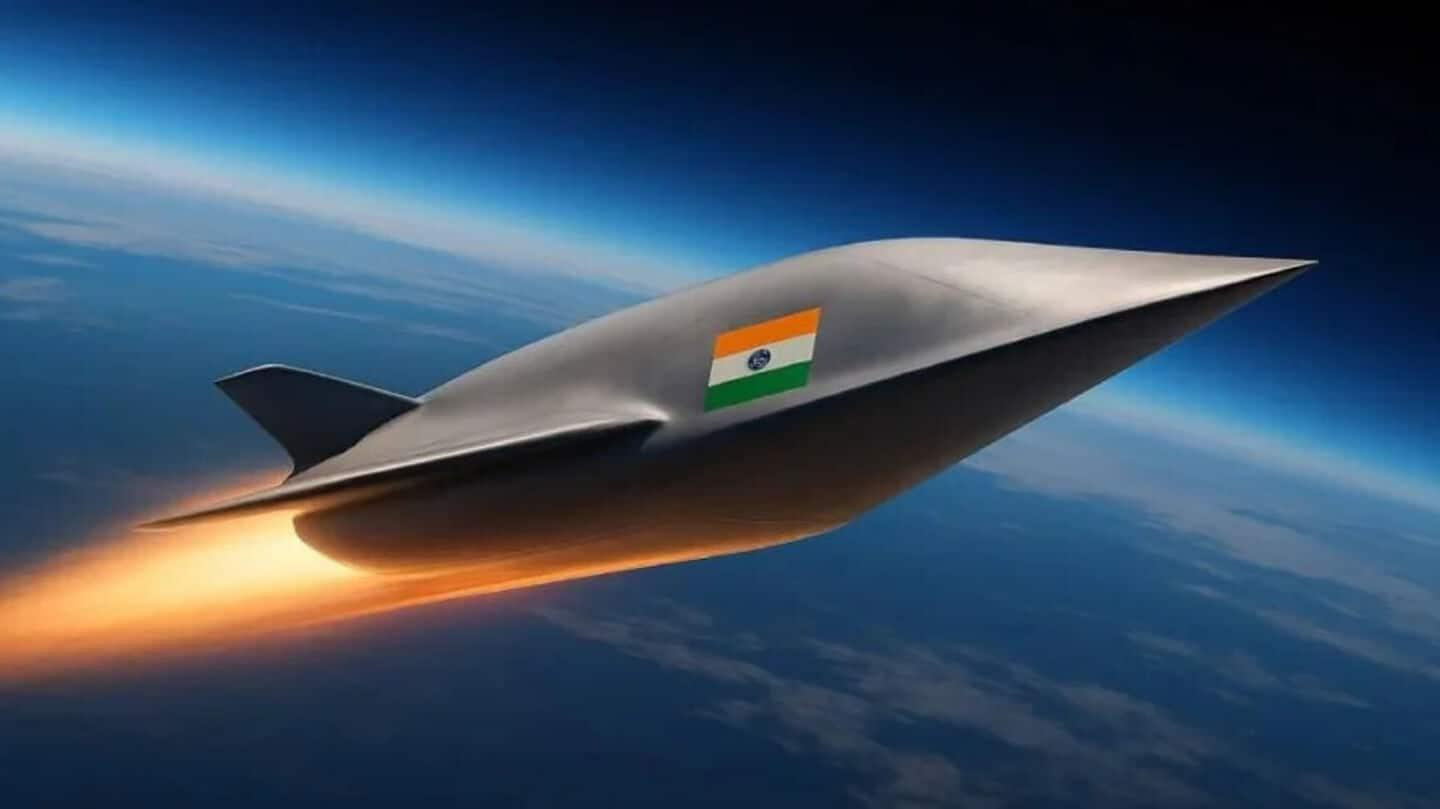

The evening of 8 May 2026 was a cinematic experience for Odisha, as the skies above the state served as the backdrop for a science-fiction film. A beam of bright orange-white light was visible in the sky. Footage captured the unknown object as it travelled at high speed across eastern India and into parts of Bangladesh.
It didn’t take long for social media to go into an uproar over one overwhelming question.
Has India tested an unknown Hypersonic missile?
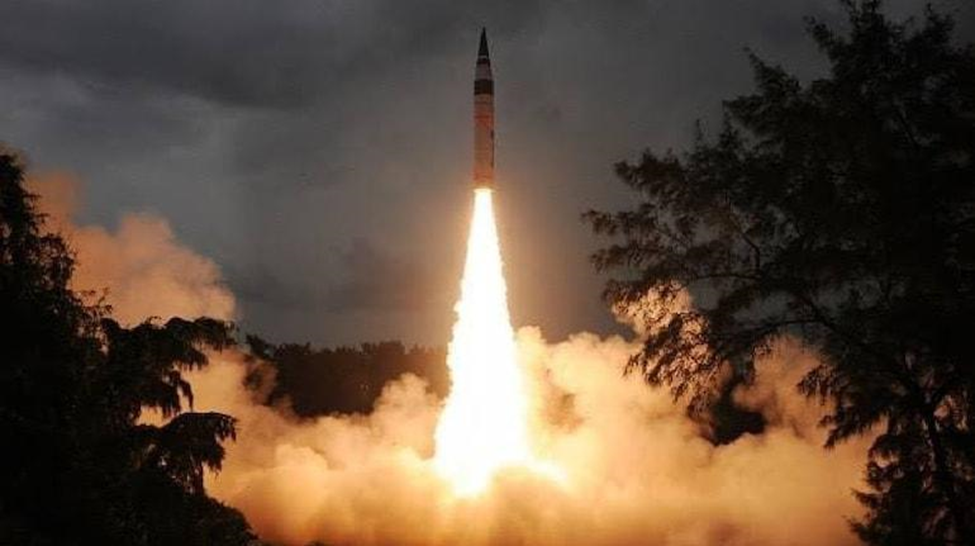
Later, it was confirmed that the launch was linked to a high-level test of the Agni missile off Dr APJ Abdul Kalam Island, near Odisha. The missile was said to have demonstrated India’s capabilities in its long-range strategic arsenal and MIRV technology.
Why Did This Rocket Launch Become So Mysterious?
The launch took place at night when it was getting dark. The high-altitude missile reflected sunlight, lighting the dark sky in a glowing spiral. This caused the rocket to appear bigger and more impressive than usual.
The residents of Odisha, West Bengal and Cox’s Bazar, Bangladesh, saw a glowing object moving quickly on the horizon. The video was soon becoming viral.
Later, the Indian government announced it was an advanced trial of the Agni missile with an MIRV capability.
The concept of MIRV Technology.
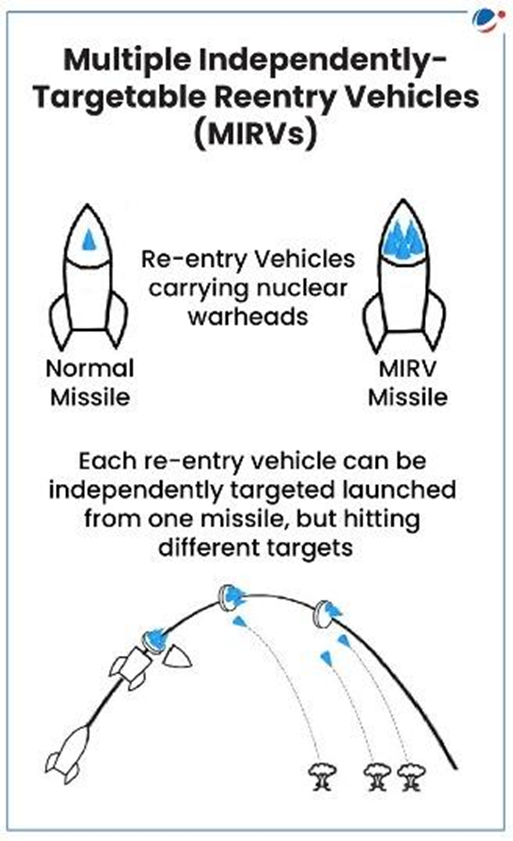
Multiple Independently Targetable Re-entry Vehicle is the acronym for MIRV.
A technology that is used to launch multiple warheads from one missile. The missile then separates as it ascends to high altitude and releases multiple payloads that can simultaneously hit multiple targets.
This increases the difficulty of intercepting the system and makes it more advanced.
Simple Example
A normal missile:
- One missile
- One warhead
- One target
A MIRV missile:
- One missile
- Multiple warheads
- Multiple targets simultaneously
This puts India in the company of only a few countries that possess advanced MIRV-capable missile systems.
Is it a real hypersonic missile?
It’s at this point that the mystery gets exciting.
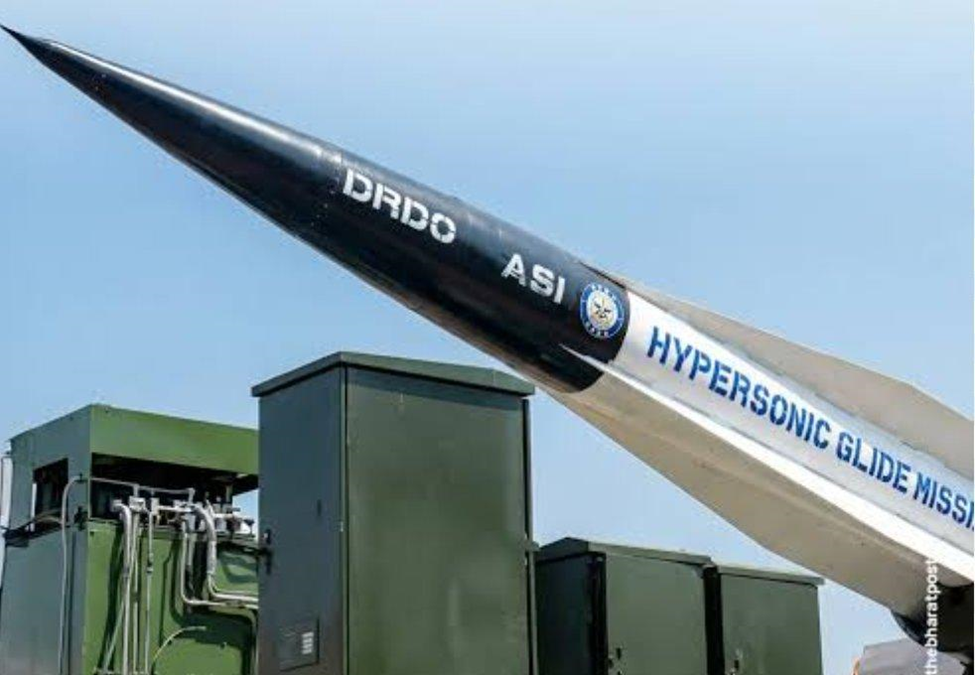
The missile’s launch reportedly used technologies related to India’s future hypersonic programs, some defence experts believe. But word of a completely hypersonic missile has not yet been made public.
What is a Hypersonic Missile?
A hypersonic missile exceeds Mach 5.
That means:
- More than 6,000 km/h
- More difficult to detect than most air defence systems are
Hypersonic missiles can:
- The reverse turns on the air during flight. Turn around in the air during flight.
- As of today, the flights will be at a lower height.
- Reduce radar detection better than ever before
In recent years, India has been conducting tests of hypersonic technologies, including LRAShM and SFDR.
Features of the Advanced Missile Tested Over Odisha
1. Long Range Strike Capability
The missile is said to be capable of thousands of kilometres. The exclusion area extended over the Bay of Bengal, measuring almost 3560 km, indicative of a strategic, long-range system.
2. MIRV Payload System
In a single mission, the missile may deliver multiple warheads to different targets.
3. High Speed Flight
During the re-entry phase, the missile likely reached hypersonic level speeds.
4. Advanced Navigation
In the modern era, Agni systems are used:
- Ring laser gyroscope
- Satellite navigation
- Advanced onboard computers
The trajectory correction is performed in real time.
5. Strong Survivability
MIRV missiles are more difficult to defend against, since air defence must intercept multiple warheads rather than just one.
Rocket Launch Mechanism Explained
People looking on see a missile being fired, but don’t really know how it happens.
The simplified mechanism for such a high-level missile launch.
Step 1. Launch Phase
The missile takes off on powerful rockets.
Solid-fuelled boosters create a tremendous amount of thrust.
Step 2. Mid-Course Flight
The missile partially escapes Earth’s atmosphere and then follows a ballistic trajectory.
At this stage:
- Guidance systems control the direction.
- Computers calculate the trajectory
- Measures altitude and speed
Step 3. MIRV Separation
When the missile has reached this desired altitude:
- The payload section is opened up.
- Multiple warheads separate
- An independent target is provided for each warhead.
Step 4. Re Entry Phase
- When the warheads re-enter the Earth’s atmosphere, they are moving very fast.
- Due to air friction, temperatures rise to a very high level.
- The warhead is protected at this time by heat-resistant materials.
Step 5. Terminal Guidance
Advanced systems deliver warheads with high accuracy to the intended target.
What are the technologies involved (parts) in this missile?
Highly sophisticated missiles developed by India are a mix of several state-of-the-art technologies.
A solid fuel rocket motor.
Solid propellant allows:
- Faster launch readiness
- High thrust generation
- Better storage capability
Composite Materials
Lightweight heat-resistant materials get better when they do the following:
- Speed
- durability
- range
AI Assisted Guidance Systems
Today’s missiles are equipped with cutting-edge computing systems for:
- target correction
- navigation
- flight stability
Thermal Protection System
In the atmosphere, the heat on re-entry can be very hazardous.
Special heat shields cover the missile body and its payload.
Radar Evasion Capability
Interception is difficult due to the advanced flight patterns and quick movements.
Why is this launch significant for India?
It is a testament to India’s strategic defence technological strength.
There is a race toward development as countries around the world strive to do so:
- Hypersonic missiles
- The presence of an AI-based defence system.
- The mechanics of the weapons’ operation.
In the future, the development of MIRVs and hypersonic technology in India would definitely boost the nation’s defence capabilities.
Experts feel such a system is essential, as modern warfare relies more and more on the following:
- speed
- precision
- survivability
- multi-target strike capability
Is this a Mandala in the form of Agni 6?
Some defence experts believe that it may be related to the future development of Agni 6. There’s no official word yet, however.
Agni 6 is likely to have the following features:
- Longer range
- Greater range of attack options for missiles
- Improved stealth technology
- Better maneuverability
If true, this could be one of India’s most advanced missile systems ever developed.
Final Thoughts
The enigmatic rocket shot up over Odisha, leaving millions of people abuzz with its dramatic appearance in the night sky. Initially, it seemed like a UFO or something unknown, but it was actually one of India’s most advanced missile trials.
So, was this simply a test of a more advanced Agni MIRV, or was it related to the hypersonic missile program?
India is making swift strides towards the next generation of defence technologies.
The streak of light over the Indian state of Odisha could not have been merely a rocket path—a preview of what was to come in the future of modern warfare and missile technology.
FAQs
1. Is it a hypersonic missile test that Odisha launched?
India’s official confirmation that it had conducted an advanced Agni test using MIRV technology came just a few minutes later. Just a few minutes later, India officially announced that it was an Agni test with MIRV technology. There are suggestions that hypersonic technologies have also been used.
2. What is MIRV technology?
MIRV can carry multiple warheads per missile, allowing them to hit separate targets.
3. How could the rocket be seen from Bangladesh?
The launch took place at dusk, and the sun’s glow on the high-altitude exhaust made the plume visible from great distances.
4. What are the reasons why hypersonic missiles are dangerous?
Hypersonic missiles have speeds greater than Mach 5 and can manoeuvre during flight, making them more difficult to detect and intercept.