The innovation of spatial computing and AR/VR welcomes you to the virtual world and cracks the flat world down. The technologies make passive watching an active discovery. They transform the manner in which we create, learn, and solve problems daily. The change is occurring today, and it can be felt by artists and engineers.
What Is Spatial Computing?
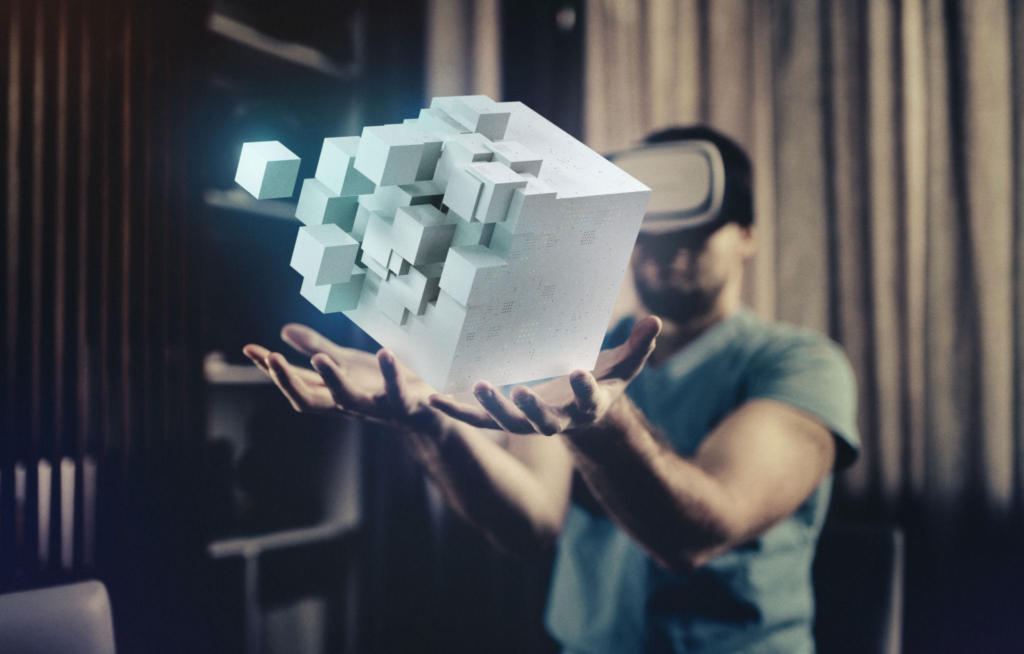
Spatial computing is a combination of the real world and the virtual world. It allows computers to acquire a sense of space, depth, and motion of human beings. AR is an overlay of valuable information on your table or factory floor. Immersive reality makes you fully feel in a three-dimensional workshop. All these elements combine to create the foundation of immersive technology, which reacts to your natural gestures, gaze, and voice orders. You do not press buttons. You move, touch, and even interact like in real life.
Creators Build Without Limits
Artists are no longer gazing at two-dimensional surfaces. They mould computerized clay using hand controllers intuitively. Before purchasing a piece of furniture, interior designers take virtual tours around rooms. Moviemakers recreate multi-tiered scenes in lifelike computerized sets. The process of arranging the 3D models is done mid-air by graphic designers. These simulation devices reduce the time used in production and generate more innovative concepts. Spatial computing offers an unlimited space to experiment and not to waste materials.
Students Learn by Living the Lesson
Medical students have virtual patients who respond to and bleed in a delicate surgery. With a mere hand action, engineering students assemble and disassemble 3D engines. Studies in architecture are undertaken by touring the buildings that are yet to be constructed. History pupils walk the streets of old civilizations. This AR/VR development causes lessons to be memorable, as students are exposed to the content themselves. Engagement rises dramatically. Techniques of complicated theories are transformed into physical entities. The process of learning becomes not dull memorizing but an exciting discovery.
Professionals Work Smarter and Faster
Remote teams sit at a common table in a virtual form of brainstorming. In the process of fixing the heavy machinery, factory technicians are coached step-by-step with AR glasses. Walkable models of the buildings are given to clients on various continents by the architects. Surgeons will use 3D images that can be rotated and looked at in all angles to plan the operations they do. The immersive technology reduces the cost of travelling and speeds up decision-making. It allows professionals to achieve a solution to complex problems sooner and more easily when they have the ability to manipulate data in three dimensions.
The Future Arrives Today The development of spatial computing and AR/VR will become as commonplace as smartphones. Already, early adopters receive quantifiable creative and professional benefits. The technology enhances everyday work by eliminating the physical distance and providing spatial depth. It welcomes all to relate to information more naturally. Enter into the experience. The space age of a flat screen is coming to its end, and the space revolution is on its way.