
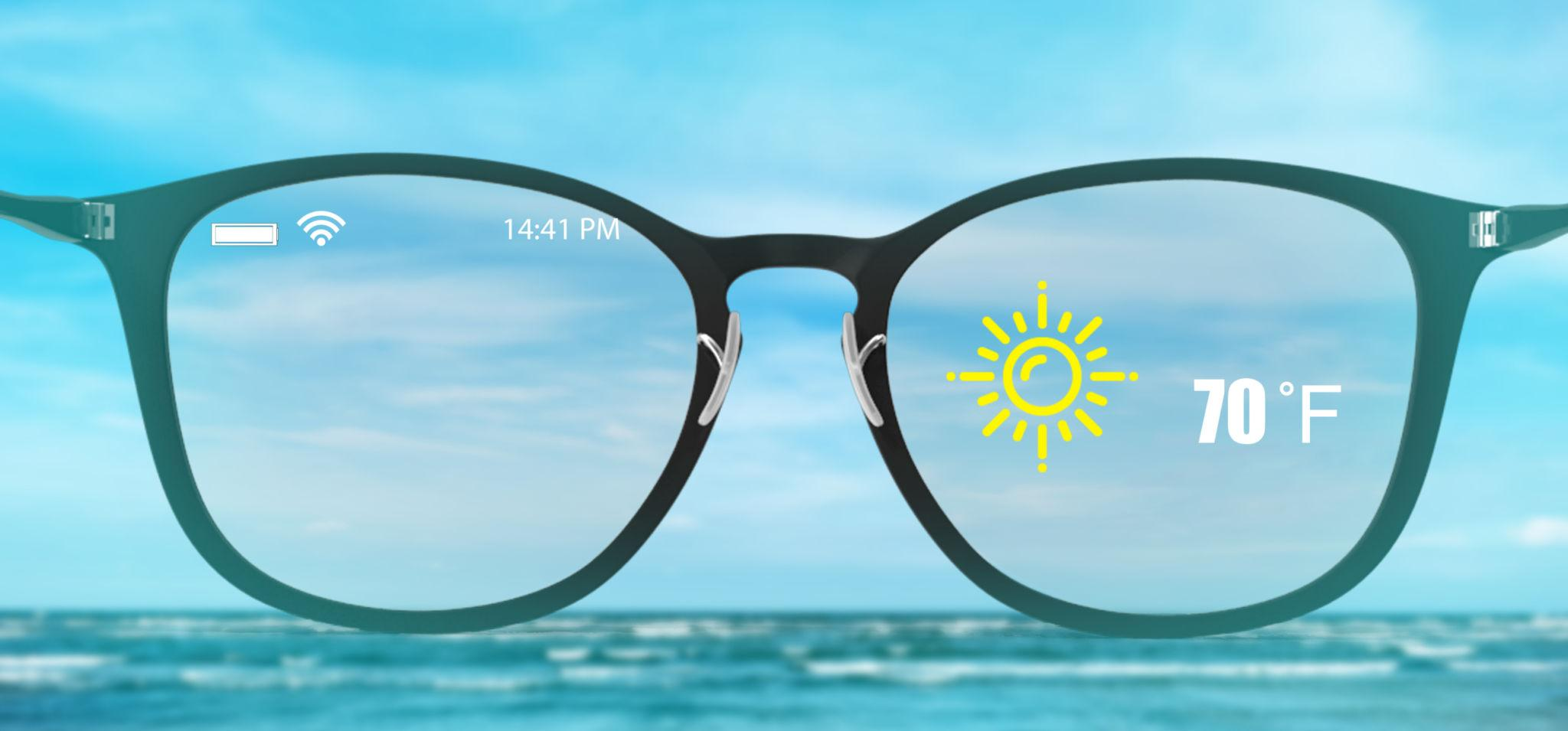

A new generation of devices is taking its place in day-to-day lives. Smart tech eyewear and smart body-worn sensors are transforming business processes, social interactions, education, consumer behaviour, movement, and well-being.

Neural translators built into spectacles are now able to translate languages in real-time, and continuous physiological measurements are made by biosensor clothing. Such innovations are becoming more intuitive, responsive and made to suit individuals. The technology giants in the industry are investing huge sums of money in body-worn AI ecosystems, as they believe that the technology will transform human interaction and collaboration in the future.

What are AI Wearables and Smart Glasses?
Smart eyewear is a wearable device that uses digital technology to add real-time features, GPS directions, photography, AI-powered questions, and AR overlays to regular glasses.
AI-driven wearables include:
- Smart eyewear
- AI-enabled audio buds
- Connected wrist devices
- Biometric health bands
- Intelligent fitness trackers
- Immersive AR/VR headsets
These devices collect information about the user, decipher behavioural patterns, and provide context-sensitive real-time feedback.
Key market players:
- Meta’s intelligent spectacles
- the spatial computing headset of Apple.
- Samsung’s connected ecosystem
- Google experiments with AI on the body.
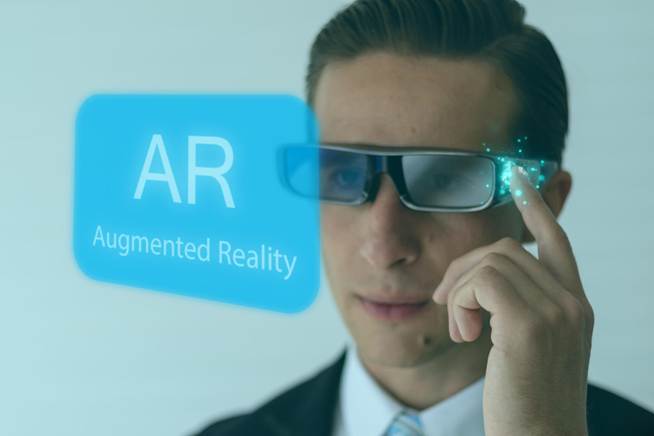
The reason why Smart Wearable Technology is becoming very popular is that
Individuals desire a natural experience with technology. Smartphones compel individuals to keep gazing at the screens. The AI wearables eliminate this barrier as they introduce information to the environment of the user.
This is growing due to several factors:
1. Hands Free Convenience
The smart glasses enable users to communicate with AI while walking, driving, cooking, or working.
Example:
An AI smart glasses wearer can enquire:
Make a copy of this menu in English.
The glasses automatically display translated text on the lenses.
2. AI-based Assistant in Real Time.
Contemporary AI wearables are powered by voice recognition and machine learning to deliver quick responses.
Users can:
• Ask questions
• Send messages
• Get reminders
• Search the web
Controllable smart home devices.
and without the touch of a phone.
3. Health Monitoring
Wearables that use AI are changing the field of healthcare.
Fitness bands and Smart watches are now able to monitor:
- Heart rate
- Oxygen levels
- Sleep patterns
- Stress levels
- Physical activity
There are even sophisticated devices that can detect irregular heart rhythms and alert the user in advance.

How AI Smart Glasses Work
AI smart glasses are a combination of several technologies:
- Artificial Intelligence
- Augmented Reality
- Cameras
- Microphones
- Sensors
- Cloud Computing
The glasses capture environmental data using cameras and microphones. This information is then processed by AI algorithms, which provide valuable responses.
For example:
AI glasses may be used to break down the steps of a complicated mathematical formula one at a time, in case a student stares at a complex equation.
The glasses can recognise landmarks and provide historical information in real time when a tourist walks through a foreign city.
This generates a very interactive online experience.
Industries that are transforming with the help of AI Wearables.
Healthcare

Surgeons are also using AI-powered smart glasses during surgeries to access real-time information about patients.
Patients’ wearables to monitor chronic conditions remotely
Continuous monitoring systems can help eliminate emergency risks in hospitals.
Education
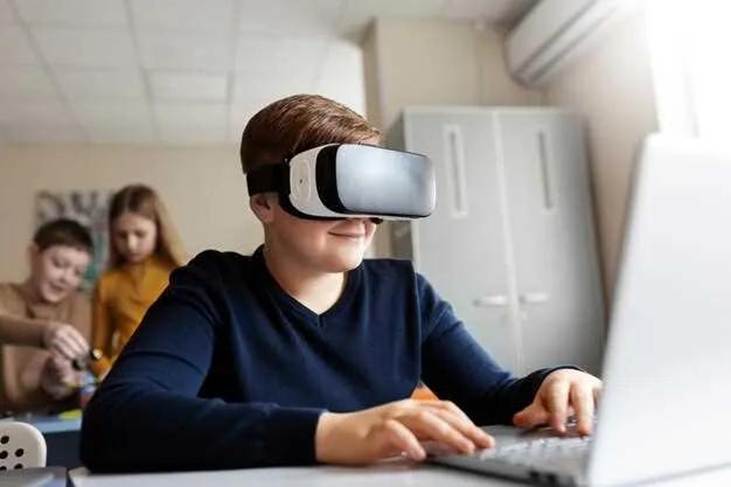
Pupils can study with immersion of their visual senses.
The possibility of studying biology and seeing a 3D human heart on-site is incredible.
The use of AI tutoring systems in smart glasses could help make learning personal to all students in the near future.
Fitness and Sports
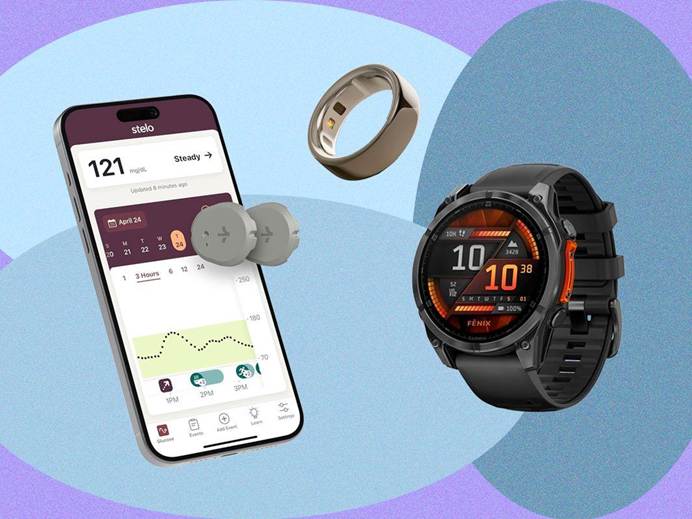
Athletes use AI wearables to enhance performance by analysing the data.
Devices track:
- Movement efficiency
- Calories burned
- Recovery time
- Muscle strain
Coaches use this information to maximise training programs.
Business and Remote Work.

The use of AI wearables is enhancing workplace productivity.
Factory workers use the smart glasses to:
- Step-by-step instructions
- Safety alerts
- Equipment diagnostics
Augmented reality environments can help remote employees attend virtual meetings.

The Emergence of Augmented Reality Wearables.
AR, or Augmented Reality, is one of the biggest factors making smart glasses popular.
AR does not substitute for reality; it incorporates digital elements into it.
For example:
Otherwise, navigation arrows may be present on the roads when walking.
Use: Visuals may be displayed during the shopping process.
It is possible to have real-time subtitles in conversations.
This will provide a smooth online experience.
Technologists believe that AR wearables will one day oust smartphones from performing most of their everyday chores.
Privacy Issues Related to AI Wearables.
Although it is exciting, there are grave issues.
Smart glasses have cameras and microphones that continually capture information.
People worry about:
- Privacy invasion
- Facial recognition misuse
- Data security
- Surveillance risks
There is now a debate on ethical guidelines for wearable AI devices between governments and tech firms.
Much-needed transparency and responsible AI development will be crucial in the next several years.
Still have problems with Smart Glasses.
Although the technology is advancing rapidly, several challenges remain.
Battery Life
The processing of AI uses a lot of power. Numerous gadgets need to be charged regularly.
High Cost
High-end AI wearables are not affordable to the average consumer.
Example: There are high-cost mixed reality headsets.
Social Acceptance
A large number of users are still not comfortable with visible technology in public places.
Wider adoption will largely be through design improvements.
The Future of AI Wearable Technology
Smart wearable devices have a bright future.
It is estimated that the wearables of AI in the future will include:
- Real-time emotion recognition.
- Instant language translation
- Brain-computer interfaces
- Personalised AI assistants
- Advanced health diagnostics
The next generation of smart glasses can be made virtually invisible while providing much more functionality than today’s smartphones.
The firms are competing to develop lightweight, stylish, and efficient wearable gadgets.
The innovation is gaining pace amid competition among Apple, Meta, Google, Samsung, and other technological giants.
The Reason why this Technology is important.
AI wearables and Smart glasses are not just new gadgets. They symbolise a change in human relations with technology.
Humans are now starting to embed intelligence in their bodies rather than carry technology in their pockets.
This could reshape:
- Communication
- Healthcare
- Education
- Entertainment
- Work environments
- Social interaction
It might take time to happen, yet the effect might be as great as the introduction of smartphones.
AI wearables and Smart Glasses are among the fastest-growing technologies in the world. In the past, wearable technology was limited to simple fitness and digital watches. With the advent of Artificial Intelligence, wearable technology has now become much smarter, quicker and more useful in everyday life.
Smart wearables powered by artificial Intelligence are impacting and revolutionising people’s communication, work, travel, study, and health management. Companies everywhere are investing billions in smart wearable innovation, as experts believe wearable AI devices will be a significant part of the future of human life.
How Smart Glasses Work
Smart Glasses are a combination of several advanced features:
- Artificial Intelligence
- Augmented Reality
- Voice Recognition
- Smart Sensors
- Cameras and Microphones
- Internet Connectivity
This pair of glasses can project digital information straight into your eyes, without requiring you to hold a smartphone.
For example:
Walking aids to navigation (directions)
Real-time language translation.
- Live notifications
- Voice-controlled searches
- Video recording
- AI assistant support
Some smart glasses today can even use AI vision systems to provide instant information about objects.
AI Wearables in Healthcare
One major market benefiting significantly from AI wearables is healthcare. Another industry clearly getting a boost from AI wearables is healthcare. Users can now monitor their health in real-time with the help of smart devices.
Popular features include:
- Heart rate monitoring
- Blood oxygen tracking
- Sleep analysis
- Stress monitoring
- Fitness tracking
- Emergency health alerts
Users’ data is continually analysed by an AI system, which offers smart suggestions.
Example:
When a wearable detects a pattern of abnormal heart rhythms, it can warn the wearer before the heart rhythm becomes dangerous.
This technology can be particularly beneficial for older adults and individuals with long-term illnesses.
Smart Glasses in Education
AI smart glasses are also revolutionising the education system. Digital learning resources are directly available to students via wearable displays.
Benefits for students:
- Interactive learning
- Real-time translation
- Virtual science demonstrations
- AI tutoring assistance
- Hands-free learning
For instance, medical students can learn 3D human anatomy models through augmented reality goggles that let them view them in real time.
This enhances the practical understanding and learning pace.
AI Wearables for Daily Life
With AI-integrated wearable devices, everyday activities are becoming more convenient and efficient.
Common uses include:
- Driving in smart mode
- Instant voice messaging
- Cashless payments
- Smart reminders
Real-time weather information
Use of AI for personal assistance.Use of personal assistance with AI.
There are now numerous wearable devices that can connect to smartphones, smart home systems, and cloud services to create a connected “digital lifestyle”.
Business and Workplace Applications
AI wearables are also helping companies be more productive in their workspaces.
The industries that make use of smart wearables are:
- Manufacturing
- Healthcare
- Logistics
- Security
- Retail
- Construction
Workers can get live instructions with smart glasses without stopping their work.
For example:
Product locations can be shown directly on the smart glasses screen to warehouse employees, eliminating time spent searching and improving efficiency.
Challenges and Privacy Concerns
While AI wearables have numerous benefits, they also have some significant concerns.
Major concerns include:
- Data privacy
- Cybersecurity risks
- High device cost
- Battery limitations
- Continuous surveillance fears
As these wearable devices continually collect personal data, companies need to strengthen their security measures to safeguard users’ information.
Governments in various countries are also considering rules for AI wearables.
Future of AI Smart Wearables
AI wearables could be far more sophisticated in the next ten years, experts say.
Some future innovations that could be added are:
- Brain-controlled wearable devices
- AI emotion detection
- Holographic displays
A true immersive augmented reality experience.
Advanced health prediction systems
Tech firms are currently developing lightweight smart glasses that will look just like regular glasses but with superpowered AI capabilities.
Why AI Wearables Matter
AI wearables are more than just gadgets. They are transforming the way people interact with technology. These devices eliminate reliance on conventional screens and provide quicker access to digital information.
Smart glasses and AI wearables could become as ubiquitous as smartphones, as technology becomes more affordable.
Wearable tech is heading towards more intelligent, secure, and connected human experiences.
Final Thoughts
AI wearables and smart glasses are no longer science fiction. They are quickly becoming part of daily life.
With the improvement of artificial intelligence, wearable devices will be more convenient, more intimate and more a part of human life.
The firms that develop these technologies are struggling to establish the new computing age. Wearable technology is heading towards a future in which digital intelligence is all around the user, whether in the form of augmented reality glasses, AI health trackers, or intelligent assistants.
The coming decade could transform the way human beings interact with the world entirely through AI-operated wearable devices.
link: – 7 Smart Wearables that Use Generative AI
FAQs
1. So, what are AI wearables?
AI wearables are intelligent devices that can be worn and help gather data, analyse it, and provide smart answers through the application of artificial intelligence. Smart watches, AI glasses and fitness trackers are examples.
2. Smart glasses in the future?
Some analysts reckon that someday smart glasses might supersede a range of smartphone capabilities, offering hands-free access to digital information via an augmented reality interface and AI support.
3. What are the benefits of AI smart glasses to users?
No device should be held in users’ hands, since AI smart glasses can assist them with navigation, real-time translation, notifications, voice assistance, photography, and augmented reality.
4. Are AI wearables safe?
The majority of AI wearables are designed with safety in mind, though privacy, data collection, and cybersecurity remain concerns. Users need to select reputable brands and consider privacy settings.
Related Post: – These 5 Earbuds are Affordable in 2026 aziztechsolutions.com
Related Post: –10 Budget Office Gadgets for Better Productivity – aziztechsolutions.com
Related Post: – 5 Ultra Smart Futuristic Gadgets You Will Love – %site
Related post: – Everything you need to know about Google’s most powerful mobile update, Android 17
Related Post: – UNIX Airbuds Z1 RUZO Delivers Amazing 52 Hour Battery – aziztechsolutions.com